

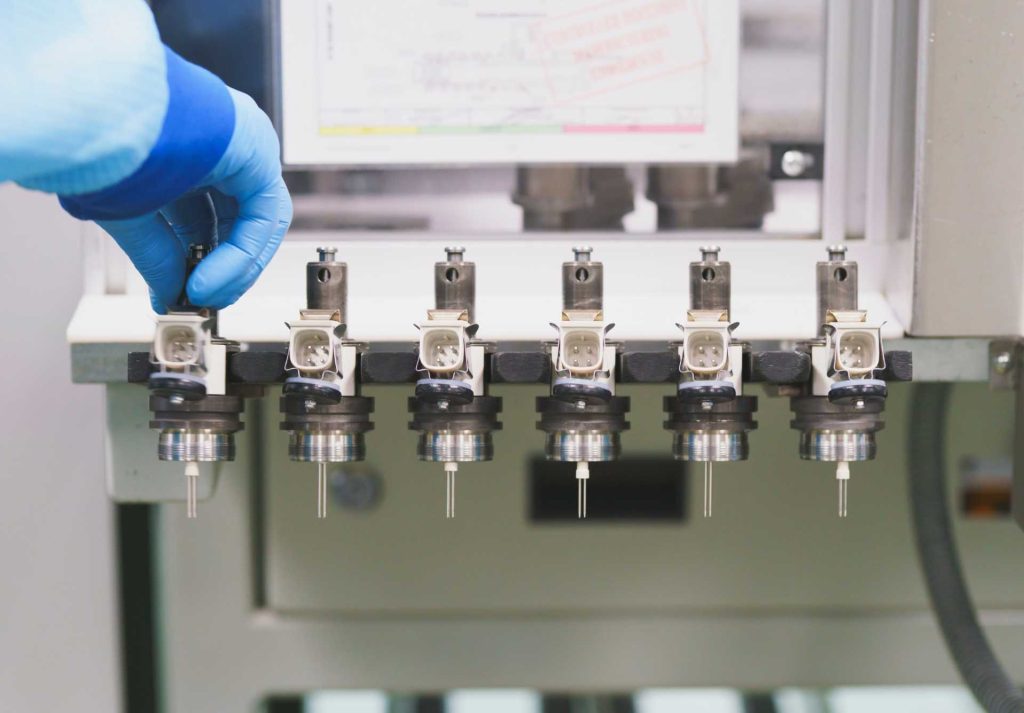
In 2026, the global transport industry finds itself under simultaneous and sometimes competing pressures. Regulators are recalibrating emissions standards. Fleet operators are managing aging assets in uncertain economic conditions. Policymakers are exploring sustainable fuel mandate acceleration while infrastructure development struggles to keep pace. And across industry, including the automotive, off-highway and aerospace sectors, engineers are being asked to deliver lower carbon outcomes without compromising safety, uptime or performance. By Todd Anderson, Chief Technology Officer, PHINIA explains further.
Yet, if there is one thing that we’ve learned over the last decade, combustion is not the enemy; uncontrolled carbon is. The energy transition is not a single switch from one fuel to another. It is a period of sustained and evolving fuel diversity.
Key takeaways
-
The energy transition will involve multiple fuels, not a single replacement.
The shift to lower-carbon transport isn’t simply replacing combustion engines with electric systems. Instead, the industry is moving toward fuel diversity, including renewable diesel (HVO), biodiesel, ethanol, CNG, hydrogen blends, and sustainable aviation fuel (SAF). Many of these fuels will coexist for decades. -
Combustion engines will remain part of the global fleet for a long time.
Transport assets have very long lifecycles—cars average over 12 years, off-highway machinery 20–25 years, and aircraft even longer. Because of this, replacing fleets quickly is unrealistic, making improvements to existing combustion systems essential for decarbonisation. -
Regulations are tightening and focusing on real-world performance over time.
New frameworks like Euro 7, EPA 2027, CORSIA, and ReFuelEU Aviation require engines to maintain low emissions not just during testing but throughout their operational lifespan and under real-world conditions. This significantly raises engineering demands. -
Precision engineering is becoming critical to meeting emissions and safety targets.
Modern fuel systems operate at extremely high pressures, meaning micron-level tolerances and millisecond timing determine combustion efficiency, emissions, and durability. Small deviations in injection timing, pressure control, or component wear can cause compliance or safety issues. -
Precision enables fuel flexibility and near-term decarbonisation.
As engines adapt to different fuel blends with varying properties, precise fuel delivery and robust materials are essential. This precision engineering bridges today’s combustion-based systems with future low-carbon fuels, enabling incremental emissions reductions without replacing entire fleets.
FAQs
- Why are combustion engines still important in the energy transition?
- What role will alternative fuels play in the future of transport?
- How are new regulations affecting the transport industry?
- Why is precision engineering becoming more important in modern combustion systems?
- How does precision engineering support fuel flexibility?
In road transport, for example, renewable diesel (HVO), biodiesel blends, ethanol and compressed natural gas remain in active use across multiple regions. Brazil continues to scale high-ethanol blends, while India is exploring hydrogen-enriched CNG. In aviation, SAF production is expanding but remains supply-constrained and significantly more expensive than conventional jet fuel, according to 2025 industry estimates. Hydrogen demonstrations are progressing, yet production, infrastructure and certification challenges mean widespread deployment remains years away.
For industry, combustion systems will be around for decades to come. At the same time, industry is being asked to perform at levels of control and consistency that were once considered aspirational. In this environment, precision is mission critical.
Industry’s reality of regulation and the long fleet lifecycle
The decarbonisation narrative is evolving. Early transition discussions often focused on rapid, linear adoption of zero-emission technologies, whereas the reality in 2026 is much more complex.
The average age of passenger vehicles in Europe now exceeds 12 years, according to ACEA data, while in the US it is closer to 12.6 years. In off-highway sectors, asset lifecycles frequently stretch to 20–25 years. Meanwhile, commercial aircrafts entering service today are expected to operate into the 2040s and beyond. What many may not appreciate is that these long fleet lifecycles fundamentally shape decarbonisation strategies today.
At the same time, regulatory frameworks are becoming more sophisticated. Euro 7 introduces stricter limits not only on tailpipe emissions but also on durability requirements, ensuring compliance over extended vehicle lifetimes. In the US, EPA 2027 standards are targeting significant reductions in NOx emissions from heavy-duty vehicles. In aviation, CORSIA and regional mandates such as ReFuelEU Aviation are formalizing emissions accounting and SAF blending requirements.
As sustainability pressures intensify and regulatory evolution continues, confidence in combustion will increasingly depend on engineering discipline at the micron level.
Todd Anderson, Chief Technology Officer, PHINIA
As emissions limits tighten, the margin for operational error narrows. This regulatory shift is fundamentally altering the performance expectations of combustion systems across industries. Now, combustion systems must demonstrate sustained compliance across extended durability cycles, variable operating conditions and increasingly diverse fuel blends. The expectation is not simply lower emissions at certification, but consistent emissions performance throughout real-world operation. That expectation rests on precision.
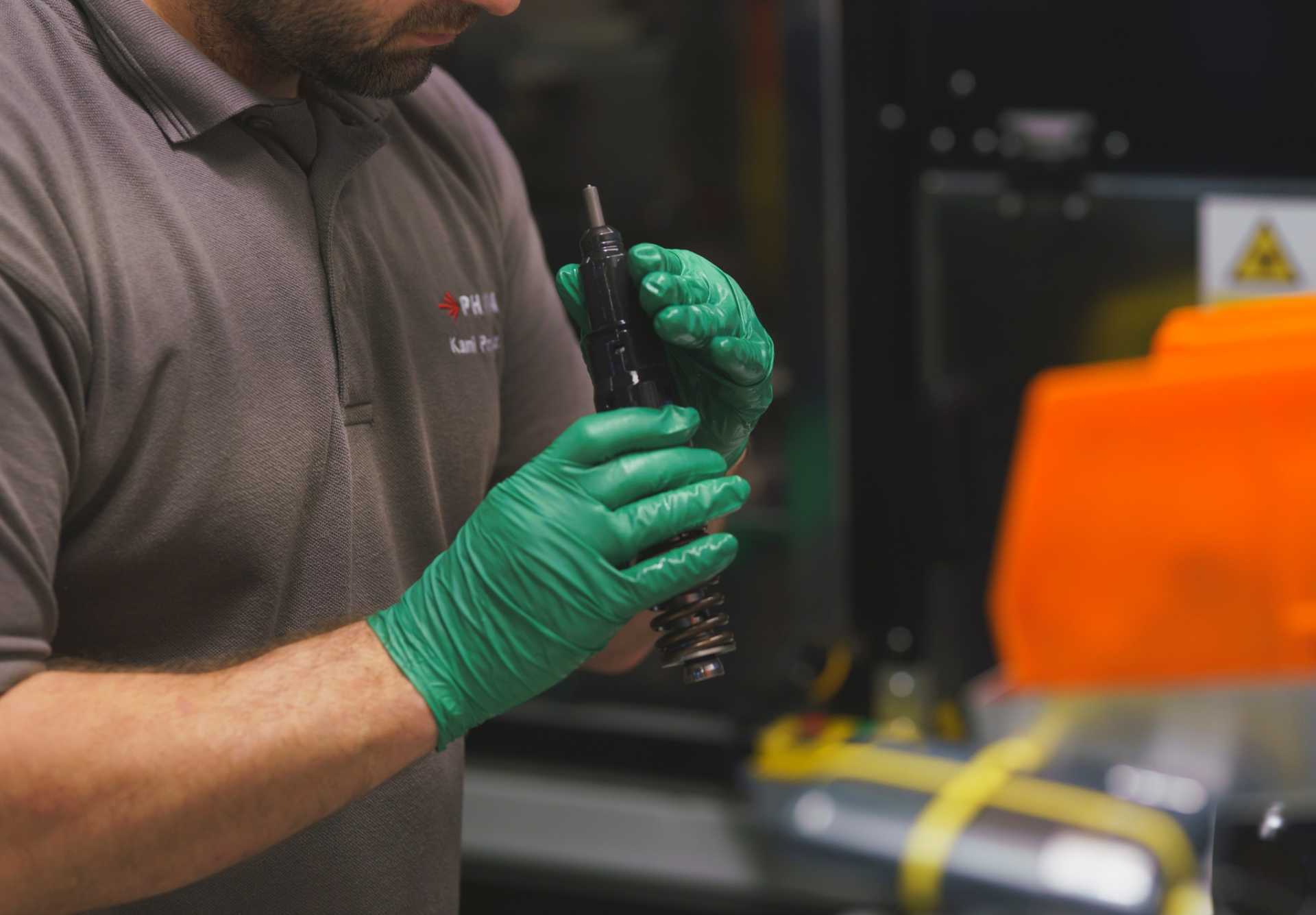
Why precision now defines safety
In critical combustion and fuel systems, tolerances measured in microns increasingly determine whether engines operate within regulatory and safety thresholds.
Modern high-pressure common rail diesel systems routinely operate in the range of 2,500bar. Gasoline direct injection systems exceed 350bar. Aerospace fuel systems must maintain stable flow and atomisation across extreme altitude, temperature and pressure gradients. Under these conditions, marginal deviations in injector geometry, pressure control, or timing can materially affect combustion efficiency, emissions formation and component durability.
Precise fuel delivery is central to this equation. Injection timing accuracy, measured in milliseconds, is critical to the combustion event. Multiple injection strategies – including pilot, main and post-injections – are used to control fuel delivery, manage NOx formation and reduce particulate emissions. Pressure regulation must remain stable across transient load changes, from urban stop-start driving to sustained on and off-highway duty cycles and high-altitude cruise.
Durability adds another layer of complexity. Euro 7’s extended durability requirements mean that fuel systems must maintain performance across hundreds of thousands of kilometres. In off-highway applications, engines may operate at sustained high load for thousands of hours per year. In aviation, components must withstand repeated thermal cycles and maintain precise flow characteristics over decades of service. Across every industry, micron-level wear, material fatigue or flow inconsistency represent a compliance risk and can not be treated as incremental degradation.
This is where precision engineering discipline becomes foundational. Surface finishes, material selection, thermal expansion modelling, and contamination control are core enablers of safety and regulatory confidence. In an environment of higher system pressures and tighter tolerances, precision plays a key part between controlled combustion and uncontrolled carbon.
Industry focus: automotive, off-highway and aerospace
Each industry brings distinct operational realities, but all converge on the same engineering imperative.
Automotive: Passenger and light commercial vehicles are navigating the transition to hybridized and multi-powertrain fleets. While battery electric vehicles are growing, ICE and hybrid platforms will remain dominant within the global fleet for decades.
Vehicles operating with urban cycles demand precise transient response, with frequent load changes and cold starts. Euro 7’s real-world emissions testing places additional emphasis on consistency outside laboratory conditions. Injection systems must therefore deliver repeatable performance across a wide operating envelope.
For hybrid vehicles, engine start-stop frequency increases dramatically. Each restart is a potential emissions spike if injection timing and pressure control are not exact. Precision directly supports compliance and driver confidence.
Off-Highway: In agriculture, construction and mining, reliability outweighs marginal efficiency gains. Equipment often operates 24/7 during critical windows. Downtime carries significant economic consequence.
Electrification faces infrastructure constraints in remote environments, making cleaner combustion and alternative fuels a pragmatic path forward. Tier 5 emissions standards in many regions are driving adoption of common rail systems and multiple injection strategies.
Here, precision underpins uptime. Systems must tolerate dust, vibration and sustained high load without drift in calibration. Injection repeatability over thousands of operating hours ensures both emissions compliance and predictable performance.
In this context, over-engineering is not the objective. Right-sized precision, focused on delivering exactly the control required without unnecessary complexity, defines long-term value.
Aerospace: Aerospace operates under uncompromising safety standards and long certification cycles. An aircraft entering service today will accumulate tens, if not hundreds, of thousands of flight hours over their lifetime, depending on whether the aircraft is used for short-haul or long-haul operations.
With SAF supply still limited and accounting for a small fraction of total jet fuel consumption in 2025, conventional and blended fuels will dominate for years to come. At the same time, regulatory pressure through CORSIA and regional emissions schemes is intensifying.
Fuel and air management systems must maintain exacting tolerances across altitude extremes and thermal gradients. Recent studies have found that maximizing efficiency gains could halve global aviation emissions, as aviation emissions remain close to one gigaton per year according to recent IEA assessments.
In aerospace, precision is vital in support of safety. Flow control stability, repeatable atomization and long-term material resilience are foundational to both regulatory compliance and passenger trust.
The bridge to fuel-flexible systems
It is clear that replacing industrial fleets overnight is neither economically nor environmentally feasible. Manufacturing new vehicles and aircrafts carries its own carbon cost. Extending the efficient operation of existing assets, improving fuel flexibility and reducing per-cycle emissions gives a strong path for immediate, scalable impact.
This fuel flexibility introduces variability in energy density, viscosity, lubricity and combustion characteristics. It goes without saying that, despite this increased level of variability, engines must operate safely and predictably. Fuel injection systems must accommodate differences in compressibility and flow behaviour without compromising spray pattern integrity, pressure control systems must remain stable despite changes in fuel temperature or composition, and sealing materials must resist chemical variation without accelerated wear.
In addition, inconsistent fuel quality presents additional risk, particularly in remote or emerging markets. Contamination tolerance, filtration strategy and component robustness are therefore critical to maintaining safety. In aerospace, SAF blends can alter fuel properties such as density and aromatic content. Maintaining precise metering and atomization under these conditions is essential to prevent lean blowout or incomplete combustion. In off-highway environments, where on-site fuel storage is common, systems must withstand variable handling conditions while preserving injection accuracy.
With this background, fuel flexibility only amplifies the need for precise engineering capabilities. Precision engineering provides the bridge between today’s installed base and tomorrow’s fuel-flexible powertrains. Systems designed with tight tolerances, robust materials and adaptable control strategies can evolve alongside fuel standards and regulatory frameworks.
Looking ahead
Pragmatic decarbonisation strategies recognise that progress is built step-by-step, not through singular breakthroughs. Precision is a key enabler of that progress.
This is because incremental improvements compound. A fractional reduction in fuel consumption – particularly when multiplied across millions of vehicles or flight hours –produces measurable emissions reductions. Enhanced durability reduces replacement cycles and associated material impact. Consistent injection control supports cleaner combustion across alternative blends.
As sustainability pressures intensify and regulatory evolution continues, confidence in combustion will increasingly depend on engineering discipline at the micron level. In safety-critical systems, when precision is prioritised, the future of lower- and zero-carbon fuels is supported for decades to come.
For more articles like this, visit our Sustainability channel