

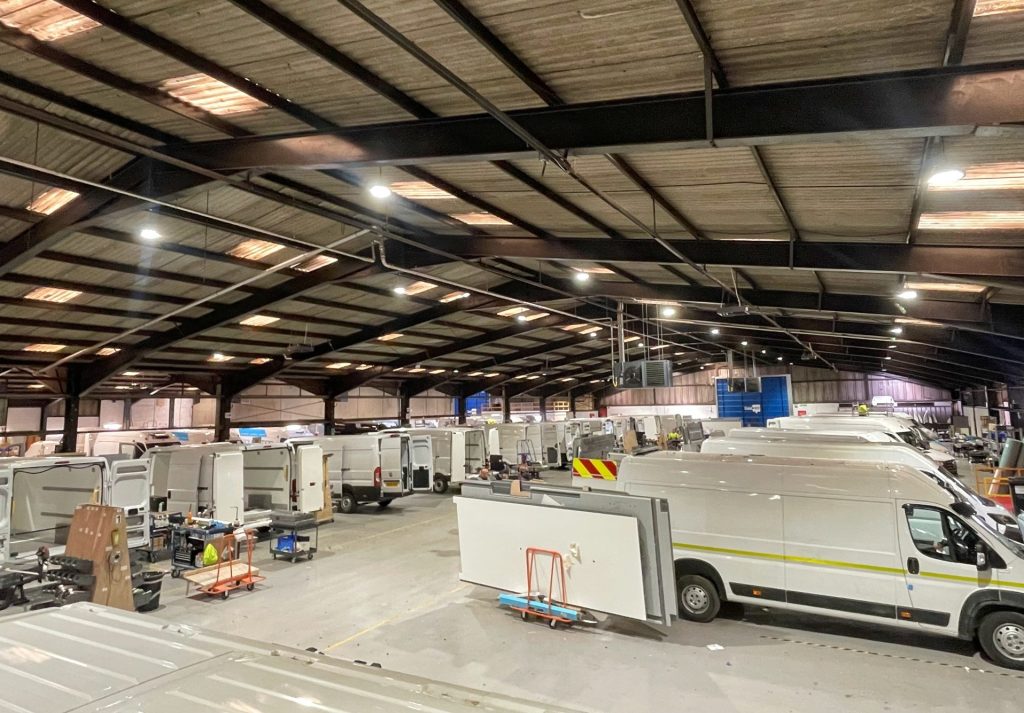
Most manufacturers talk about operational excellence as if it’s a destination – a certification achieved, a system implemented, a target hit. This fundamentally misunderstands what excellence demands. Joe Gleave, Operations Director, CoolKit explains more.
Real operational transformation isn’t about adding processes on top of existing foundations. It’s about acknowledging when those foundations cannot support the weight of ambition and having the conviction to rebuild them entirely.
The danger of reliance
Manufacturing has a quiet addiction: dependence on systemic, tacit knowledge that is difficult to pass on and develop the rest of the team’s capabilities.
The operator who knows exactly how to coax performance from a temperamental machine. The supervisor whose mental map of workflow bottlenecks exists nowhere else. The unwritten rules that keep production moving.
This feels like competence, but it is fragility dressed up as expertise. When your operation runs on unspoken knowledge, you’re operating a daily negotiation with chaos.
Every absence becomes a crisis. Every scale-up attempt reveals new points of failure. You cannot replicate what you cannot articulate, and you cannot improve what you cannot measure.
The uncomfortable truth is that moving from craft-based to process-based manufacturing requires making explicit what has always been implicit.
It means telling experienced people that their hard-won knowledge needs to be captured, standardised, and – yes – made replaceable.
Start at the beginning
Here’s what nobody tells you about culture change – we all wish it started with inspiration, but in truth, it begins with boundary-setting.
You cannot build a high-performance culture when the previous culture tolerated everything. The first task is definition.
What is acceptable? What isn’t? At what point does repeated underperformance become a disciplinary matter rather than a coaching opportunity?
Setting these parameters inevitably means some people choose to leave. Others are asked to leave. Your retention data temporarily looks worse even as your operation strengthens. This is the cost of transformation that award entries rarely discuss.
But here’s what emerges on the other side – a calmer organisation.
When everyone understands the boundaries within which they operate, anxiety decreases as accountability increases. The chaos disappears because you’ve created an environment where people can perform consistently.
Investment timing
Investing in improvements before problems are visible is one of the biggest challenges in business transformation.
After our company suffered a major fire and faced big disruptions, we still managed to reach £21 million in turnover both years. It might seem reasonable to assume our current setup was enough – but that’s the mistake.
The systems that support £21m in business won’t be enough to support £50m. It’s crucial to expand your capacity before demand grows.
Even while we remained profitable during the disruption, we increased our press bed capacity, invested in CNC technology, added water jet cutting and reorganised our facility layouts. Some saw this as excessive investment, but it was the bare minimum for achieving our long-term goals.
The key lesson here is that strong foundations must come before growth. If you wait until your business is big to create big infrastructure, you’ll never reach your goals – something critical will fail first.
The compounding returns of daily discipline
Transformation is built on daily discipline. Every morning, supervisors run team reviews then meet with operations management. By 9:15am, every issue is understood, every escalation is addressed and the entire business is aligned. This daily rhythm has been running for eighteen months.
This is not glamorous work, and it doesn’t produce dramatic overnight results. It does, however, prevent problems from metastasising and means that people don’t spend three months storing up frustrations for an engagement meeting.
When you combine this daily rhythm with continuous improvement expectations – where every operations team member is expected to improve – you create compound returns.
One per cent better every month is 12% better every year and that is the key to achieving exponential growth.
The real measure
We’ve reduced lead times by 60% in the last 18 months. We’ve increased box body production eight-fold. We’ve achieved profitability despite a significantly higher fixed cost base following facility expansion.
These numbers matter, but they’re lagging indicators. They tell you what happened, not if you’re building something sustainable.
The real measures are different. We ask ourselves if customers were to visit unannounced, would they see operations running exactly as we describe them? Can we absorb a 20% growth spike without systemic breakdown? Would our best operators choose to stay if offered more money elsewhere? Are problems surfaced immediately or hidden until they become crises?
The answers to these questions reveal whether you’ve built a system or just achieved temporary results through heroic effort.
The mission beyond market position
The mission is to build an operation that could stand as an example of manufacturing excellence in any sector – one that would be recognised as world-class in the sectors we provide solutions for.
In a competitive industry without the protection of patents, sustainable advantage comes from doing the fundamentals better than anyone else.
The businesses that thrive are those with the operational discipline to integrate new technologies early and the consistency to earn trust on the most complex, high-stakes projects.
The work continues
The metrics have followed our work, but CoolKit, like any business, is never going to be ‘finished’. The beauty of operations is in the continuous improvement and incremental gains.
Every day, the operations team arrives with two responsibilities: execute today’s plan and improve tomorrow’s capability.
This is not a project with an end date. Never being satisfied with current performance while being proud of the trajectory is the essence of operational excellence.
For more articles like this, visit our Leadership channel