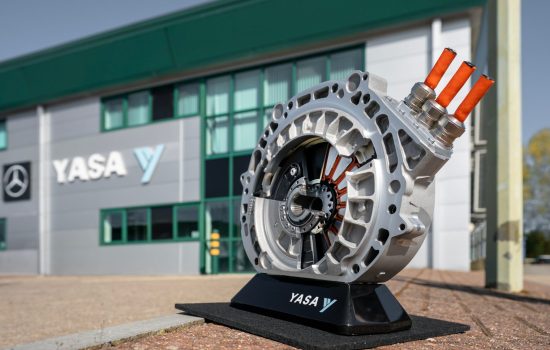

YASA, the global leader in the design and production axial flux electric motor technology, has announced it has produced its 50,000th motor. This landmark achievement underscores the company’s transformation from Oxford University PhD project to global leader in next-generation electric propulsion across multiple sectors.
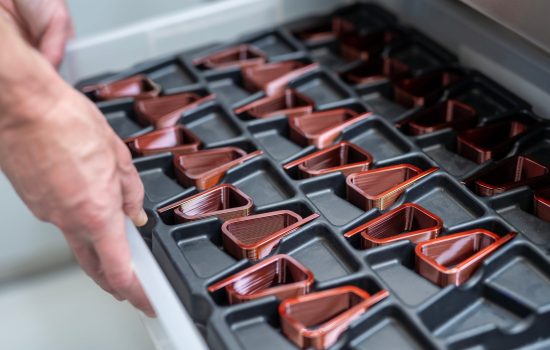
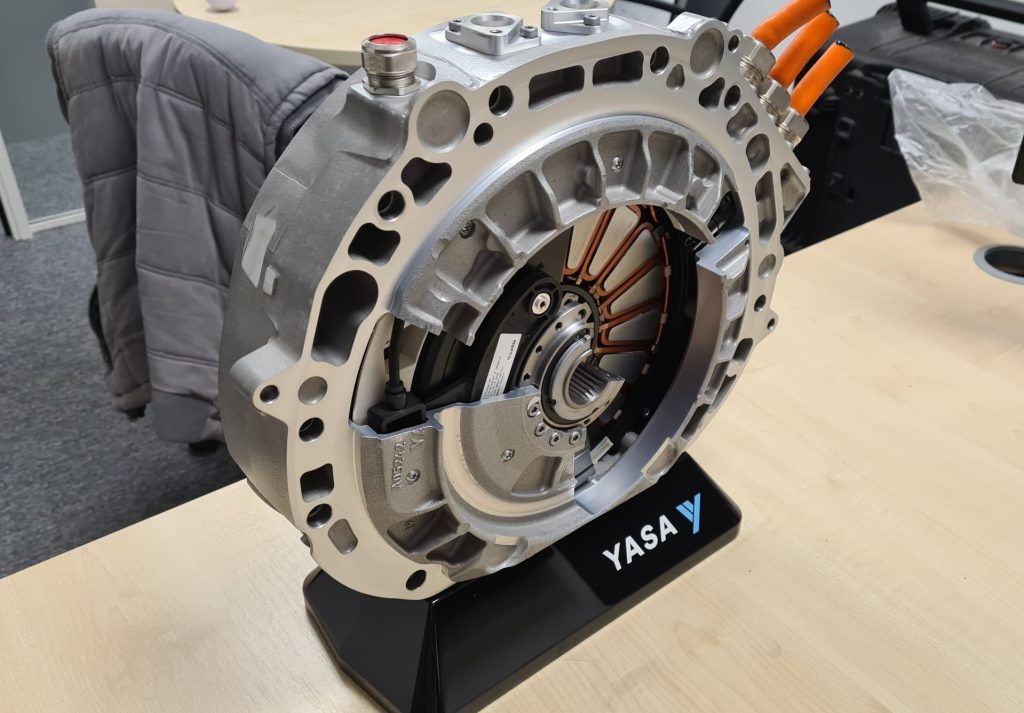
The milestone demonstrates YASA’s remarkable journey from academic innovation to volume manufacturing. Founded in 2009 as a spin-out from Oxford University by Dr Tim Woolmer, YASA has revolutionised electric motor design with its proprietary ‘Yokeless And Segmented Armature’ technology, delivering up to three times the torque density and double the power of conventional radial flux motors, whilst being 50% lighter and occupying significantly less space.
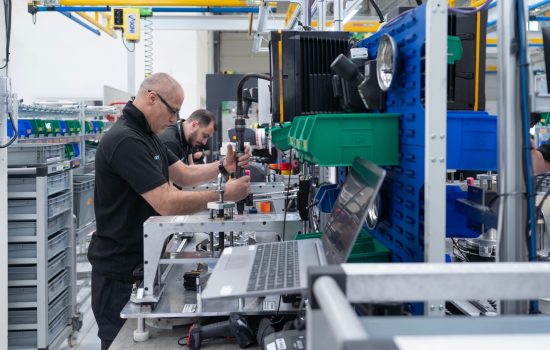
Recent strategic investment has substantially increased manufacturing capacity at YASA’s Yarnton facility near Oxford, positioning the company to meet growing demand from world-leading automotive manufacturers and beyond. The company’s axial flux motors currently power high-performance vehicles from prestigious marques including Ferrari and Lamborghini, where the technology’s exceptional power-to-weight ratio and compact design unlock new possibilities in vehicle architecture and performance. This technology will soon extend to Mercedes-AMG’s high-performance EVs, further validating its versatility across the automotive sector.
YASA’s motor technology is equally well-established in marine, off-highway and industrial applications, where its exceptional power density and compact design deliver transformative performance advantages.
Breakthrough performance: unofficial world record
The 50,000-unit milestone follows close on the heels of YASA’s latest technological breakthrough, an unofficial world record for electric motor power density. Just last month, YASA’s engineering team achieved a staggering 59kW/kg power density with a 12.7kg prototype axial flux motor that delivers 750kW (over 1,000bhp) peak output. This represents a 40% improvement over the company’s previous record of 42kW/kg, set earlier in the summer, and more than triples the performance density of today’s leading radial flux motors.
Crucially, this isn’t theoretical performance, the motor is currently running on dynamometers, demonstrating real-world capability with an estimated continuous power output of 350-400kW. The breakthrough was achieved using scalable materials and manufacturing processes, with no exotic components, proving that next-generation performance can be delivered at production scale.
Global growth strategy
Looking ahead, YASA is accelerating its growth strategy with a focused approach on worldwide customers seeking high performance solutions in a compact package. The company’s technology offers manufacturers across the automotive, marine, off-highway and industrial sectors a crucial differentiator in the increasingly competitive electric propulsion landscape, combining unmatched performance density with proven scalability and manufacturing viability.
Joerg Miska, CEO of YASA, said: “Reaching 50,000 units is a significant production milestone for the team at YASA. This demonstrates that our axial flux technology has evolved from groundbreaking innovation to proven, scalable manufacturing reality. From its origins as Tim’s PhD research at Oxford to powering some of the world’s most exhilarating performance vehicles, YASA has consistently pushed the boundaries of what’s possible in electric propulsion.
“Our recent capacity expansion positions us perfectly to bring this transformative technology to a broader range of customers and applications. As we look to strengthen our presence in global markets, we’re excited to work with partners who recognise that the future of electric mobility demands not just incremental improvements, but fundamental breakthroughs in motor technology. YASA’s axial flux motors deliver precisely that, enabling manufacturers across all sectors to create electric experiences that genuinely excite users whilst advancing sustainability goals.”
For more articles like this, visit our Innovation channel