



Job Title: Smart Factory Programme Lead
Company: British Sugar
What is your background and how did you come to be in your present role?
I studied biochemistry at the University of Bath and towards the end of my degree, someone from Cranfield University came to speak about a bioethanol plant at the Western Sugar Factory. It sparked my interest and my transition from traditional scientific study into the real world.
I worked for a few years at the Western Sugar Factory and learned that I was good at operating manufacturing plants. I grew into an area manager role, where I was looking after production and then, about five or six years ago, I transitioned into an R&D leadership role where I focused on process improvement.
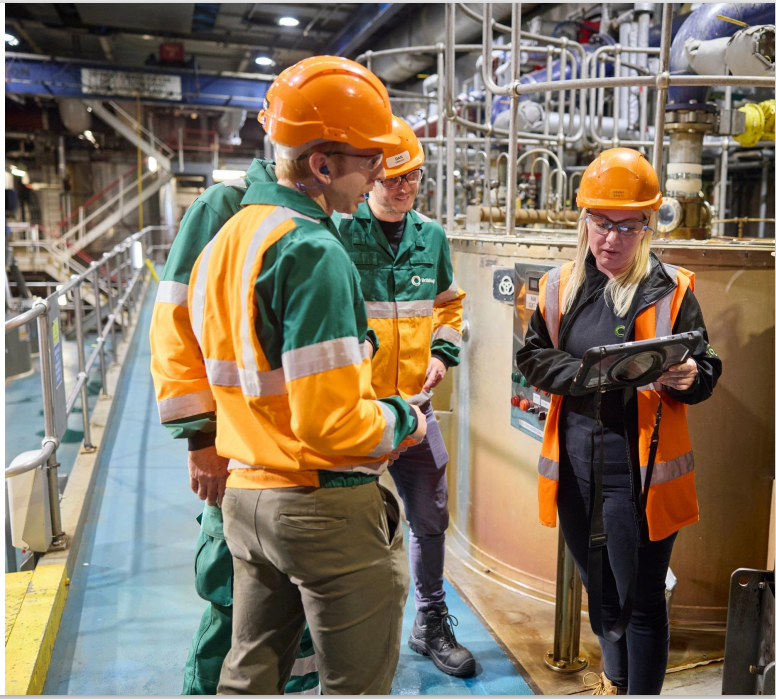
That was the start of a journey that got me where I am today. I’ve always had an interest in computers, systems and data and a couple of years ago, I moved from the pure manufacturing space to data and analytics. Now, I am looking after the smart supply chain programme at British Sugar, where we want to use advanced technologies to improve our manufacturing costs.
What has been your greatest challenge so far in your career?
The biggest challenge has been understanding that pure solutions to problems are useless unless they can be converted into people solutions. Just because I know how to fix something doesn’t mean it’s fixed — it means I must begin the process of building consensus or ensuring it aligns with the strategic intent of the business.
What’s been your greatest achievement so far in your career?
My greatest achievement has been gaining recognition within a large, traditional business where the changes in social demographics and employee retention are going to have a dramatic impact on the business’ knowledge-base.
We have ensured that each of our employees from boardroom to control room know that we treat their knowledge like gold and we have now put in place programmes that allow us to keep and retain that knowledge so it can be passed on. We’ve recognised people as a business continuity challenge and we’ve been able to future-proof ourselves.
What advice would you give to your younger self?
In your first couple of years, you’re full of confidence and what you think you know exceeds what you actually know. You find yourself not accepting the mistakes you’ve made or learning from them. In my first years there were a few times where ‘it wasn’t my fault’ was a common answer.
You then move from overconfidence to imposter syndrome, where you find yourself in a position where you cannot believe that you are the person that is responsible for knowing the answer, but you are.
My advice would be to keep that early confidence, but stay humble and be conscious of how your mindset impacts on your day-to-day.
How do you think we can raise the profile of careers in STEM?
We must make it interesting. That sounds simple, but it’s not necessarily something that traditional manufacturing is good at. There is an acceptance of the challenge we have in getting the skills we need, but it’s not understood how it could be detrimental to UK manufacturing.
The biggest barrier is the bottom line, and the return on capital invested. We need to be reframing our mindset; what determines those numbers is the talent that you have in your business. We need to be having conversations about investment into making the sector a more attractive place to work.
What is your favourite engineered/manufactured product?
I’ve got two. The first is a Lamborghini Diablo and the second, the iPhone.
Both products show a combination of art and simplicity. They are both focused on how they look and make people feel. But then you also have simplicity of them. They are there to look good while doing what they were made to do.
Can you give one interesting fact about yourself that not many people know?
I am a huge fan of The West Wing. Once while watching Mastermind, I got all the questions asked to a contestant on The West Wing correct, which is incredibly geeky…
What advice would you give to someone considering a career in manufacturing?
My advice would be that everyone should try before they buy. The manufacturing industry isn’t for everyone. There is a balance in the sector between adapting to be more appropriate for more people but it must be the right people.
Gain experience where you can look at the types of work, the tasks, the people, the culture and then understand whether you’ve got a desire to work like that.