
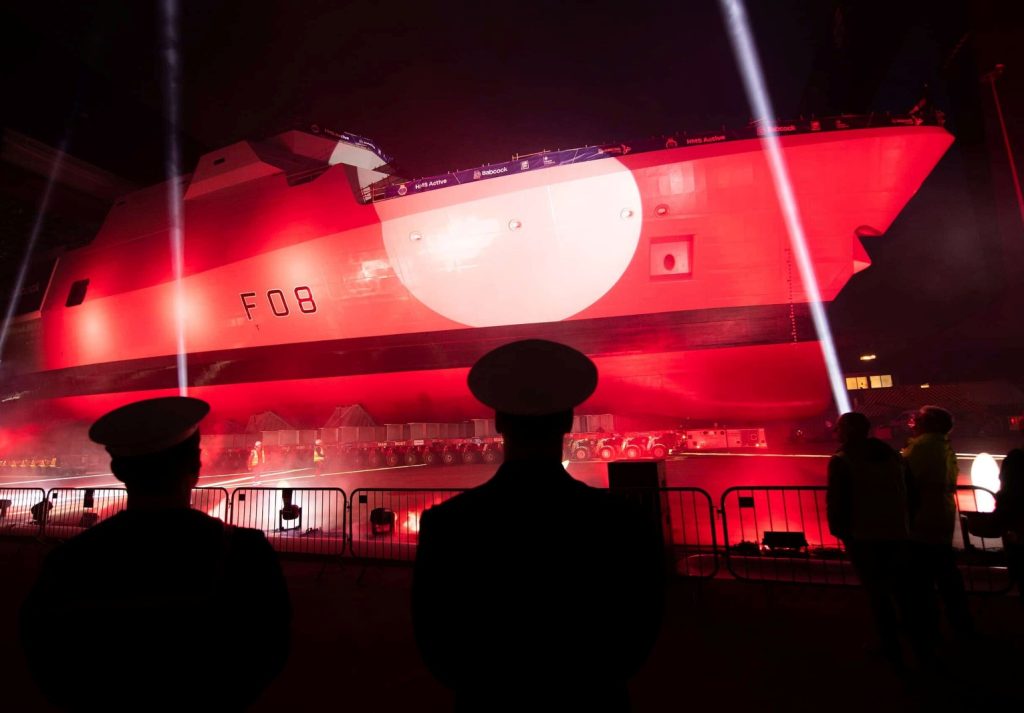
Two major milestones in the Royal Navy’s Type 31 Inspiration-class frigate programme were marked this week at Babcock International’s Rosyth facility in Scotland, highlighting progress on the UK’s next-generation warship fleet.
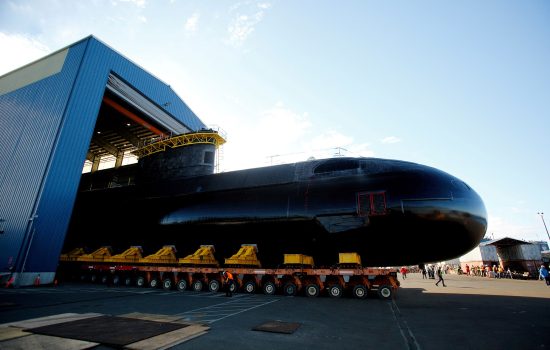
The ceremonial steel cut for HMS Bulldog signalled the official start of construction on the fourth of five Type 31 frigates, while HMS Active (the second ship in the class) was rolled out of the ship assembly hall ahead of its first entry into the water.
The milestones reflect the pace of delivery across the programme, which uses modular shipbuilding techniques designed to accelerate construction while improving efficiency. Guests at the Rosyth yard were shown the advanced manufacturing infrastructure supporting the programme, including the purpose-built ship assembly hall.
Each vessel in the five-ship series incorporates lessons learned from earlier builds, particularly in sequencing, integration and supply chain management. Improvements identified from the first two ships are already being applied to later vessels, including greater outfitting of compartments and systems before block assembly to reduce integration time.
David Lockwood, chief executive of Babcock International Group, said the twin milestones demonstrate the momentum behind the programme.
“Delivering the Steel Cut for HMS Bulldog and the Rollout of HMS Active on the same day is a powerful demonstration of the drive and delivery focus of our Type 31 programme as we build the next modern, future-ready fleet for the Royal Navy,” he said.
Lockwood added that the programme is also contributing to wider UK shipbuilding capability.
“We are not only building a new class of ship at Rosyth, we are also at the forefront of a national endeavour that is strengthening the UK’s shipbuilding industry… while creating an advanced industrial footprint and expertise that will support the future of global shipbuilding for generations to come.”
The Type 31 programme is intended to strengthen the UK’s sovereign defence capability and support a broad network of suppliers. Most of the work is being carried out in Fife, Scotland, supported by UK and international companies, including small and medium-sized enterprises.
Babcock estimates the programme sustains around 2,500 skilled jobs while deepening domestic expertise in complex warship design, construction and integration.
The programme is based on Babcock’s Arrowhead 140 frigate design, which has also been selected internationally. Poland has chosen the design for its Miecznik frigate programme, and multiple Arrowhead 140-based ships are in build in Indonesia, including two new design and build licences secured recently.
With construction advancing across all five ships, the Type 31 programme remains a central element of the Royal Navy’s future surface fleet and a key contributor to the UK’s long-term shipbuilding strategy.
For more articles like this, visit our Leadership channel