Lucy Wills, Chief Operating Officer at Finsbury Food Group, explores how manufacturers can turn operational excellence into lasting business capability.
Operational excellence is often discussed as a series of improvement projects. In reality, if it is going to create lasting value, it must be baked into a business, shaping how it thinks, acts and improves every day. Its role is to underpin and de-risk growth, building the resilience to scale profitably and sustainably.
Manufacturing businesses do not stand still: they grow, acquire, integrate, automate and adapt to changing markets. Short-term improvement projects have their place, but are rarely enough on their own. The greater challenge is creating performance that is repeatable and scalable, as well as being sustainable. This is the kind of performance that outpaces growth, rather than simply trying to keep up with it.
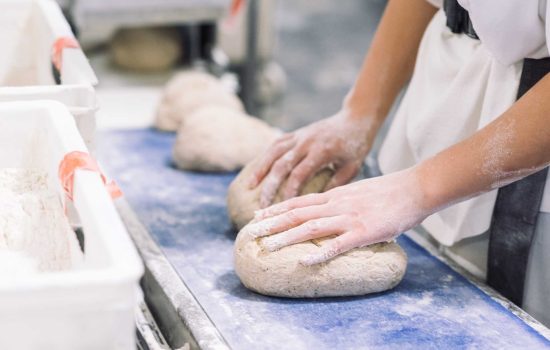
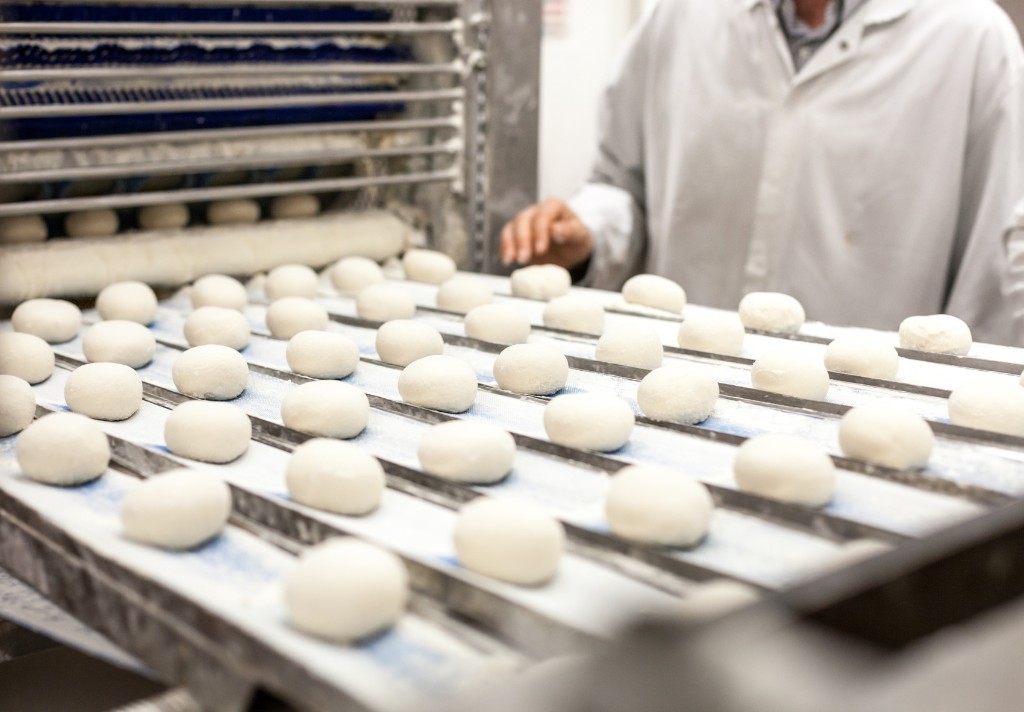
At Finsbury Food Group, we’ve grown from a collection of acquired bakery sites into a joined-up speciality bakery group, spanning everything from celebration cakes to artisan sourdough, across sites in the UK and Europe.
That diversity is a strength, but it means excellence cannot be treated as a narrow manufacturing initiative. It has to connect systems, people, culture, performance and long-term capability.
Here are four lessons we have learned from building our Finsbury One Excellence Programme; our single, group-wide operating system that delivers one common way of running and improving the business end-to-end, consistently across every site and function.
1. Move beyond short-term improvement projects
Continuous improvement is essential in manufacturing because it solves immediate problems, removes inefficiency and improves how work is done. However, operational excellence must go further.
Improvement activity often starts with a specific issue, be that a service challenge or a performance gap. Important to address, but the bigger question is whether it can be embedded and built on.
For Finsbury, excellence means creating a system that allows performance to improve consistently and sustainably. This requires clear standards, common ways of working, structured governance and regular reviews. Crucially, improvement cannot depend on one person, one project or a single site ethos. It has to run through the system, not whoever is in the room.
If a business improves performance for 12 weeks but cannot sustain it, the underlying capability has not changed. Long-term operational excellence is about making improvement repeatable, and that repeatability is what de-risks future stages of growth.
2. Build maturity as well as performance
Performance matters because there’s no value in a programme that doesn’t show demonstrable progress. But maturity matters just as much, as it’s what makes performance stick.
A manufacturer can deliver a strong result, but if the process and behaviours behind it aren’t embedded, the improvement fades. Mature operations have the discipline to sustain performance and keep improving. That’s why Finsbury One focuses on maturity as well as performance, providing a common framework and a clear view of where each part of the business is on its journey.
This matters for a complex, multi-site business like ours. Growth through acquisition brings together different sites, systems, cultures and levels of maturity. Excellence creates consistency without stripping away the specialist expertise that makes each site valuable. This lets growth integrate cleanly rather than create drag.
The goal isn’t uniformity for its own sake, but enough common structure that every part of the business can improve with confidence and work across functions, not in silos.
3. Look outside your own sector
The best ideas often come from outside your industry. If the ambition is to keep improving, it’s important not to benchmark only against what’s familiar.
Different sectors have different strengths; some are further ahead in automation or data. Looking beyond your own sector challenges assumptions about what ‘good’ really looks like.
At Finsbury, we want to understand how strong manufacturers operate more broadly, not just how similar bakery businesses perform. That broader perspective raises ambition and encourages teams to bring the outside in.
4. Make excellence a permanent capability
The most important lesson is that operational excellence isn’t a launch moment that is announced, rolled out and completed. It’s a long-term commitment, designed to run independently of any single team or function.
That means people capability must sit at the centre. Processes, systems and data only create value when people understand and believe in them. That’s why the Finsbury Academy, our platform for delivering capability across apprenticeships, graduate programmes, technical skills and leadership pathways, has become central to our approach.
We talk a lot about cultivating a growth mindset. That does not happen by accident; instead, it takes coaching, shared goals and a genuine commitment to developing people.
This is the real engine: disciplined operations need capable people, and capable people running disciplined operations generate sustainable value which ensures compoundable improvement. It’s a virtuous cycle: each turn leaves the business stronger and able to integrate future growth.
The same principle applies to technology. We’ve built a best-in-class data and systems platform, not as an end in itself, but as the foundation that makes excellence repeatable across every site, and the platform we’re now building on as we move into AI-enabled ways of working. The biggest determinant of success with new technology is rarely the technology itself, but whether the organisation is ready to use it well.
For manufacturers, this is where long-term value is created. When operational excellence becomes a permanent capability, its role is to underpin and de-risk growth. It gives the business the resilience to scale profitably, absorb complexity and strengthen customer relationships into strategic partnerships.
A journey without a finish line
Ultimately, operational excellence is a journey without a finish line. Manufacturing businesses will always face new challenges, almost all of them external. A lasting approach gives a business the structure and confidence to respond in a disciplined way, and to continue to successfully grow through those challenges.
For me, the real test isn’t whether it creates impact at launch, but whether it keeps creating value long after the initial energy has passed, carried forward by the system itself, not individuals. That only happens when excellence connects performance with maturity, data with action, technology with people and growth with resilience.
About the author
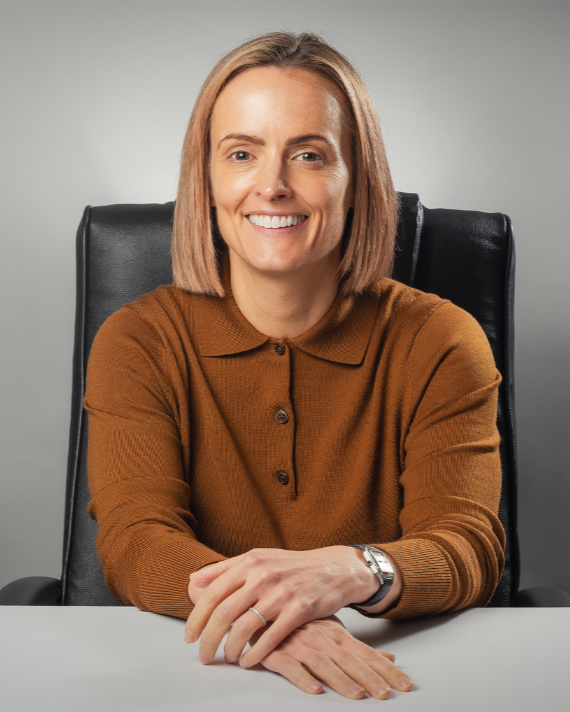 Lucy Wills is COO at Finsbury Food Group, a speciality bakery manufacturer operating across the UK and Europe. She has 20 years’ FMCG experience, 15 of which have been at Finsbury.