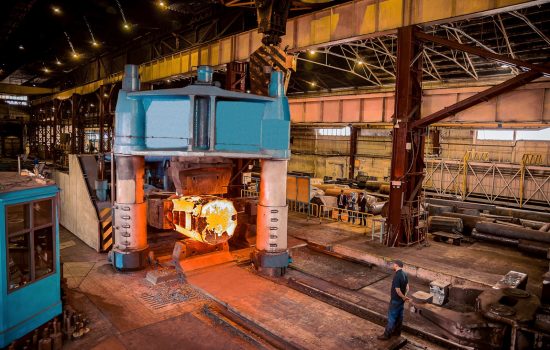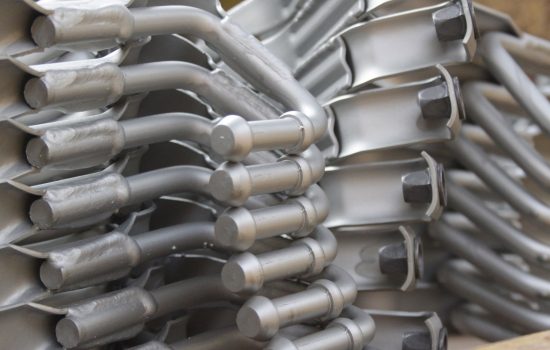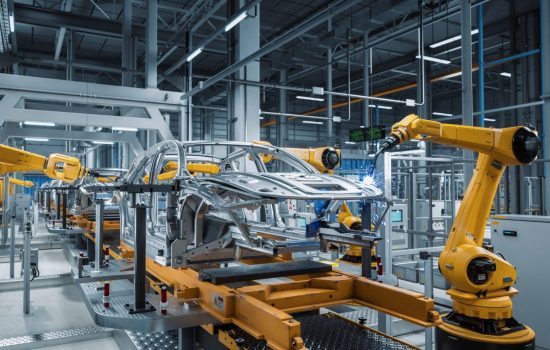


Hundreds of downstream manufacturers will still be hit hard by the new steel safeguarding measures being introduced tomorrow – despite a slight softening by ministers. This is the urgent message from the Confederation of British Metalforming (CBM), who represent the interests of more than 75,000 employees at 200 companies involved in the production of fasteners, forgings, sheet metalwork and cold rolled products.
CBM President Steve Morley, a veteran of the automotive sector, has welcomed improvements on the original proposal, but insisted there is still work to do to protect UK output and jobs. Having canvassed his members, he believes several of the quotas still don’t reflect what is required by critical suppliers to the aerospace, auto, construction, defence, energy and medical sectors.
These new measures will simply pile on unnecessary costs and disruption for both downstream firms and the major OEMs and primes. We could genuinely see some of our biggest companies make the decision to move their operations overseas to avoid the financial implications of trying to protect a domestic steel industry that can’t make what UK firms need.
Steve Morley, President, Confederation of British Metalforming (CBM)
“We are pleased the government listened to us and increased some of the quotas – this will alleviate some immediate short-term pain, but the bigger picture is still very worrying for firms.
“The key challenge now is to make sure the product scope reflects what we can actually make in the UK. Nuances of some grades of steel mean that they aren’t available domestically, so companies then have to source overseas to meet their production requirements.
“These new measures will simply pile on unnecessary costs and disruption for both downstream firms and the major OEMs and primes. We could genuinely see some of our biggest companies make the decision to move their operations overseas to avoid the financial implications of trying to protect a domestic steel industry that can’t make what UK firms need.”
The CBM believes Cat 14 and Cat 27 are two of the biggest concerns for industry, two vitally important grades of steel that are used in precision component manufacture for many of the world’s most important parts. It is widely acknowledged that manufacturers need up to 2.5 times the increased quota just to meet current market requirements, let alone any additional material required for the elusive ‘growth’ government is chasing.
“Ministers say they’re going to review things in 12 months, but I can tell you now the damage will already be done if they leave it that long,” explained Steve. “We are urging them to monitor the impact of these changes on a monthly, if not weekly basis and we are going to continue to lobby for that all-important ‘backstop’.”
He continued: “What we mean by this is some exemption of tariffs if UK mills fail to produce the grades and volumes that they have ‘promised’ and on which the quotas were based to meet downstream supply chain demands.”
Having worked in operations most of his life, Steve believes the required jump in domestic production capacity from 30% to 50% of the UK’s total steel requirements is one hell of a leap and certainly won’t be achieved anytime soon.
“Everyone connected with the sector believes there will be a shortfall, and we can’t afford to sleepwalk into this situation. The CBM has requested production KPIs from the steel producers on their production performance to ensure the capacity promised is being met.
“If this request isn’t granted, we will instead monitor the situation through our members. The backstop is intended to give thousands of companies a fallback plan to ensure they can maintain production if volumes don’t materialise.
While the Confederation of British Metalforming thanked the government for listening, it still feels a plan that is workable for all is required. Steve concluded: “This has to be a workable plan for downstream metal users otherwise it will just be a stay of execution, which helps nobody.”
UK Steel Director-General, Gareth Stace added: “We thank trade officials at the Department for Business and Trade for their extensive work to secure UK steelmakers the maximum possible access to the EU quotas. However, there is further work to be done by the government as UK-EU reset talks continue.
“Securing wider export access for certain high value steel products will be critical for the long-term viability and profitability of the UK steel sector. The UK and EU are interdependent markets, and we hope both sides will take a reasonable view of each other’s needs as discussions take place over the coming months. UK Steel and our members stand ready to assist the government in this task.”
Use cases
Footprint Tools is a historic, family-run British manufacturer of premium hand tools, with a lineage dating back to the 18th century and the brand originating in 1875.
Director Tim Jewitt, commented: “We’re all for supporting UK Steel and I think you’d struggle to find a manufacturer that says otherwise. However, as a downstream manufacturer we must call out the ‘insanity’ of these steel safeguarding measures introduced by ministers, who have no grasp of operational reality.
In my opinion there has been a complete dereliction of duty by the powers that be. They could quite easily have mapped out the steel requirements of the supply chain vs. what steel is actually made here, before putting in draconian measures.
Tim Jewitt, Director, Footprint Tools
“To impose steel tariffs while two of the UK’s mills are currently closed feels like a backward step. We must stop pretending we’re the EU or the US with a large number of steel mills, who can make a wide variety of the hundreds, possibly thousands, of grades of steel in hundreds of different shapes, sizes and specifications.
“We can count the number of mills in the UK on one hand, and they make a fraction of the steel grades used by downstream users here.
“The whole backbone of the strategy appears to be on Speciality Steels in Stocksbridge being up and running by the third quarter, yet even insiders working within the business suggest production will not fully start until 2027. There also appears to be uncertainty about the potential acquirer now.
“The adjustment to the quotas is a welcome reprieve and helps us in the short-term. However, in the medium to long-term we still have no viable route to buy the right grades of steel we need from a UK mill.
“This means a lot of manufacturers, including ourselves, will not be able to buy the steel we need domestically, yet are going to be financially penalised when we buy it from overseas.”
Tim admits to spending more than four months of his time lobbying for changes in steel quotas, time he would have preferred to spend growing his hand tool manufacturing business or dealing with other curved balls thrown at them.
“In my opinion there has been a complete dereliction of duty by the powers that be. They could quite easily have mapped out the steel requirements of the supply chain vs. what steel is actually made here, before putting in draconian measures.
“Phasing in the tariffs as UK steel production came onboard would have helped us all in a fair way. Instead, we have a policy that throws most downstream users of steel under the bus by making it more difficult to bring steel into the UK that isn’t made here, while also allowing part finished steel products to come in tariff free – pretty much a pincer move on UK manufacturers by our own government.
“We use a grade of steel that is currently not made in the UK, so we buy it in from a great mill in Italy. We cannot buy the grade of steel in the right size and standard in the UK at present, and I genuinely can’t see Speciality Steel delivering the material we need to make our hand tools in the next six months.
“When our current supply of steel is exhausted, we then enter the arena of quotas and tariffs, trying to figure out when to order our steel to get it delivered within the quarterly quota. As a small business, up against bigger importers of steel with full-time purchasing teams, we don’t really stand a chance!
“The quota for our category of steel was originally cut by 96%, with no explanation as to why when all other quotas were cut by 60%.
“This reduction has since been changed to 51%, giving us a bit of wriggle room when 1 July comes around on our next batch of steel we are importing, as it is not currently made in the UK by any of the mills.
“It’s still a gamble and one that could cripple us financially, as some of the bigger players have the resources to buy up chunks of the quota in one go, leaving us smaller companies at the bottom of the food chain without the resources to effectively navigate the quota system.
“I’d much rather spend my time investing in Footprint and making the most of a recent acquisition we’ve completed, not trying to convince ministers to use some common sense.”
Tim concluded: “Sadly it has felt like trying to communicate with ministers through MPs has been like banging our heads against a brick wall. It has been slow, when time is of the essence. Platitudes have been given, but progress has been thin on the ground.
They say action is needed, but we see a basic lack of understanding of the problem.
“We are proud to manufacture in the UK, but successive governments are making it harder. They may feel they’ve given out an olive branch by reducing the quota reductions, but there’s thousands of firms out there who will still be hit by the ill-conceived, ill-thought-out policy that will have the opposite effect of what they aim to achieve.”
Dynamic Metals is a specialist UK supplier and processor of aerospace-grade metals, serving industries including aerospace, motorsport, defence, power generation, and engineering.
Operations Director, Alex Bailey commented: “We’ve got existing orders at international mills that could cost us an additional £3.3m when we decide to bring them into the UK after 1 July. That’s the crosshair we find ourselves in thanks to government steel safeguarding measures that are threatening to destroy domestic supply chains.”
Dynamic Metals effectively acts as a ‘store’ for UK companies looking to source speciality steels used in aerospace, defence and motorsport.
All these measures are doing is causing uncertainty. A lot of material suppliers are waiting to see what happens, so that will cause a shortage and force the price of steel up. Many firms won’t be able to afford it, and we’ll lose valuable links in critical supply chains.
Alex Bailey, Operations Director, Dynamic Metals
“The firms we supply need our material in smaller quantities than you would get at a mill and they don’t want to keep unnecessary stock on-site. That’s where we come in – we buy in larger volumes, cut and process to the size the client wants and store it so it can be pulled in as it is needed.
“We have two-year agreements with many customers on this basis and all of them are fixed prices. The orders are committed with the mills to ensure supply and these cannot be cancelled.
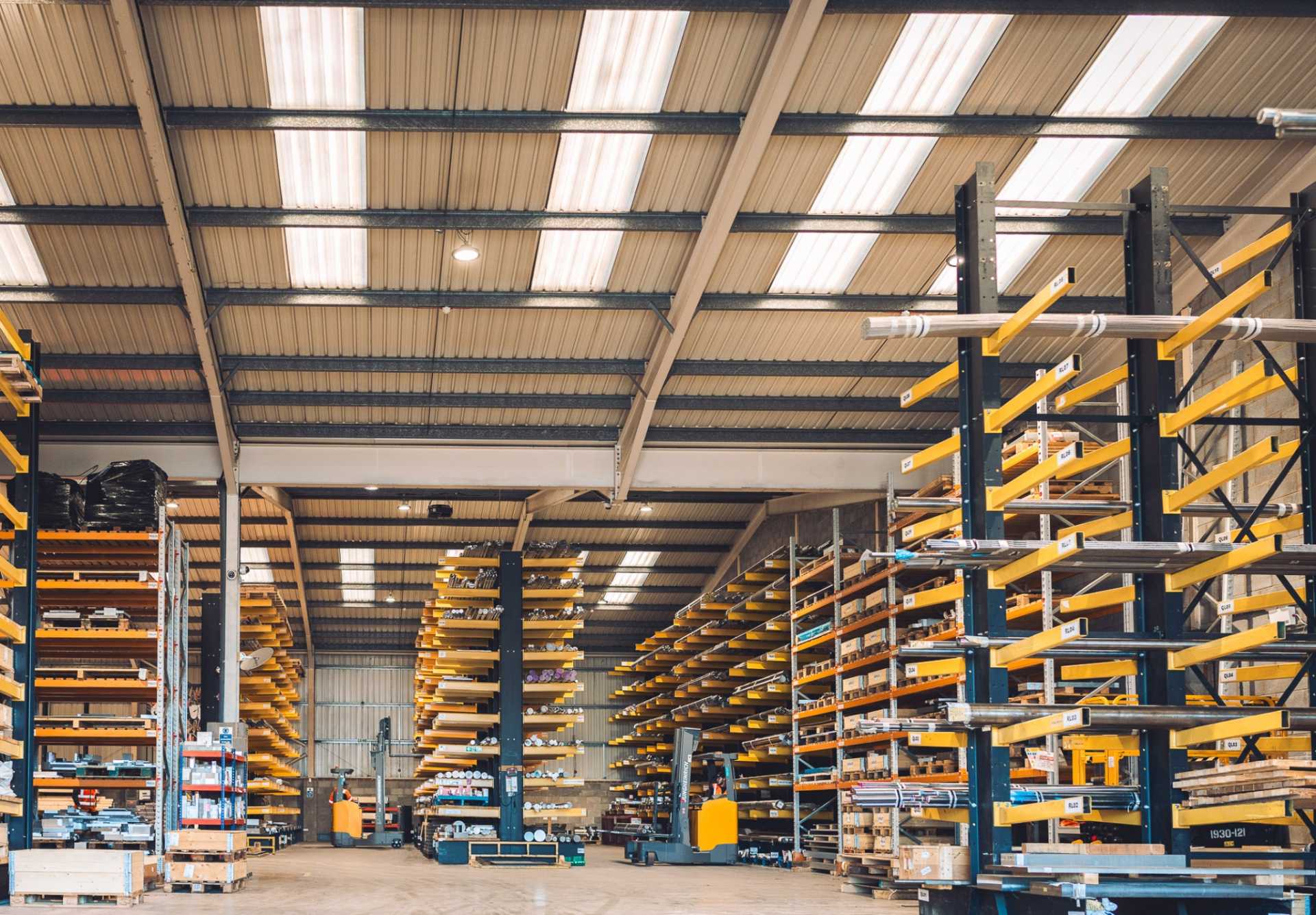
“What this gives us is a unique insight into how some of the UK’s most critical sectors use speciality steel. And I’m confident in predicting that the readjusted quotas for codes 14 and 27 are about two thirds shy of what the downstream supply chain actually uses.
“That is a massive gap and there’s very little chance of us and other users passing the cost on. We also don’t have cashflow in place to find £3.3m out of thin air, simply because ministers don’t understand how the steel sector works.”
Dynamic Metals employs 70 people at its Leighton Buzzard HQ and a technical office in Sheffield. It turnovers £35m and has a strong order book supplying both directly and indirectly the likes of Airbus, Safran, Rolls-Royce and Moog.
“All these measures are doing is causing uncertainty. A lot of material suppliers are waiting to see what happens, so that will cause a shortage and force the price of steel up. Many firms won’t be able to afford it, and we’ll lose valuable links in critical supply chains.”
Alex went on to add: “Another issue is that aerospace programmes are managed in years, and speciality steels are all sourced from approved mills. To ‘approve’ a UK mill could take up to five to ten years and the financial cost just simply wouldn’t be worth it – that’s not me talking, but what I heard from the big primes at a recent roundtable.
“The government has promised to review the quotas in a year’s time. My message is simple; if you wait that long, you will have very few companies left to give you an answer and you might be wondering why you’ve lost one of the most advanced aerospace sectors in the world to Europe.”
Hadley Group is a leading global engineering and manufacturing company specialising in advanced cold roll forming technology and steel solutions. Serving construction, infrastructure, automotive and industrial sectors, it delivers innovative, high-performance products through specialist business units.
For the past four months the Department for Business and Trade have invited us to provide our operational insight on the measures they should put in place, all fuelled by lived experiences and market dynamics. Despite lots of constructive conversations, they failed to listen to us on anything.
Andrew Gardner, Director of Procurement, Hadley Group
Andrew Gardner, the company’s Director of Procurement, said: “The change in quotas for category 4 steel is possibly better than what we were expected. There are going to be a lot worse off manufacturers in the downstream supply chain than us, but our main gripe is about the government and the Department for Business and Trade’s inability to listen.
“For the past four months they have invited us to provide our operational insight on the measures they should put in place, all fuelled by lived experiences and market dynamics.
“Despite lots of constructive conversations, they failed to listen to us on anything. We argued that Taiwan was an important supplier of high-quality steel used in the building of big warehouses, yet we’ve found out it has been mixed in a quota with Turkey and other countries – reducing the volume we and others can buy tariff-free.
“On the flip side of the coin, we warned about giving the ‘low cost’ Vietnamese market higher quotas and they did just that. It really beggars belief and makes you wonder if all the time we spent was simply ‘lip service’… and nothing more.”
Red Rhino Crushers is a family-run manufacturer of crushers, screeners, trommels and stacker conveyors, designed and built at its purpose-equipped facilities in Grantham, Lincolnshire. Drawing on over 50 years of engineering experience, the company designs, fabricates and builds every machine in Britain. Red Rhino has grown from a British manufacturer into a global brand, exporting to customers in more than 60 countries worldwide while remaining true to its family-run roots and commitment to in-house UK manufacturing.
Laura Winfield, Director at Red Rhino Crushers, said: “These tariffs “risk destroying the very industry they aim to protect. The UK government has announced that from 1 July 2026, it will introduce new steel trade measures that will reduce tariff-free import quotas and apply a 50% tariff on out-of-quota imports. The stated aim is to protect domestic steel production, and as a proud British manufacturer, we understand that ambition. But good intentions do not always make good policy, and we are deeply concerned that these new steel tariffs risk destroying the very industry they aim to protect.
Steel is at the heart of everything we do. Three generations of our family have poured their lives into this business, employing local people, training apprentices and championing British engineering. We are not a faceless corporation. We are a family business with deep roots in our community, and we are genuinely frightened about what these changes could mean for manufacturers like us.
Good intentions do not always make good policy, and we are deeply concerned that these new steel tariffs risk destroying the very industry they aim to protect.
Laura Winfield, Director, Red Rhino Crushers
The hard truth is that our customers do not simply choose between British and imported steel. They choose between machines built here in Britain and fully finished products imported cheaply from overseas. If rising steel costs make us uncompetitive, that work does not stay in the UK. It disappears abroad, and the skilled British jobs that go with it disappear too.
We are calling on the government to urgently consider the full impact of these measures on downstream manufacturers before it is too late. Protecting British industry must mean protecting the entire supply chain, not just steelmakers, but the engineers, fabricators and manufacturers who transform that steel into world-class products. We have done that here in Grantham for nearly 60 years. We simply need the government to give us a fighting chance.
For more articles like this, visit our Leadership channel