


From wartime production lines and automotive dominance to factory closures and economic decline, Detroit’s mid-century story is one of extraordinary industrial success and painful disruption. In the second part of our three-part series, we explore how the Motor City became the world’s manufacturing powerhouse and why its dominance ultimately began to unravel.
In the first instalment of this series, we explored how Detroit evolved from a strategically located trading hub into the birthplace of modern mass production. By the early decades of the 20th century, pioneers such as Henry Ford and Ransom E. Olds had helped transform the city into the world’s leading centre of automotive manufacturing, while innovations such as the moving assembly line redefined industrial production forever.
Missed part one? Read: Detroit: The birthplace of modern manufacturing
By the 1930s, those foundations had matured into something unprecedented. Detroit was no longer simply an important manufacturing city. It had become the manufacturing city — the benchmark against which industrial centres around the world were measured.
Ford, General Motors and Chrysler dominated automotive production. Thousands of suppliers fed components into an increasingly sophisticated industrial ecosystem. New factories stretched across southeastern Michigan, while workers arrived from across the United States seeking stable employment and economic opportunity.
The city’s influence extended far beyond automobiles. Detroit had become a laboratory for industrial scale, demonstrating how manufacturing systems, supply chains and skilled workforces could be organised to produce goods in volumes previously unimaginable.
Yet the decades that followed would reveal both the extraordinary strengths and hidden vulnerabilities of that model.
For much of the 20th century, Detroit represented the pinnacle of industrial achievement. Its factories helped win a world war, powered post-war prosperity and shaped manufacturing practices across the globe.
But success can sometimes create its own challenges. Indeed, the very systems that propelled Detroit to global dominance would later make adaptation more difficult, leaving the city exposed as the industrial landscape evolved around it.
See what’s next for American manufacturing Join thousands of manufacturing leaders at Smart Manufacturing Week U.S. in Detroit, April 19–22, 2027, and discover the technologies, ideas and connections shaping the future of industry. Register your interest today ⬇️
The Arsenal of Democracy
When the United States entered the Second World War following the attack on Pearl Harbor in December 1941, Detroit faced a challenge unlike anything in its history.
For decades, the city’s factories had been optimised to produce automobiles at enormous scale. Now they would need to be transformed into the industrial backbone of the Allied war effort. The speed and scale of that transformation remain among the most remarkable achievements in manufacturing history.
Within months, production lines that had once produced passenger vehicles were dismantled and reconfigured. Engineers rewrote manufacturing processes. Workers were retrained. Suppliers adapted their operations to meet military requirements. An entire industrial ecosystem pivoted from civilian production to wartime mobilisation.
The automotive capital of America became its military workshop. Factories that had once assembled family sedans began producing tanks, aircraft engines, military trucks, machine guns and ammunition. Manufacturing facilities operated around the clock as companies raced to meet the enormous demands of a global conflict. No company better symbolised this effort than Ford.
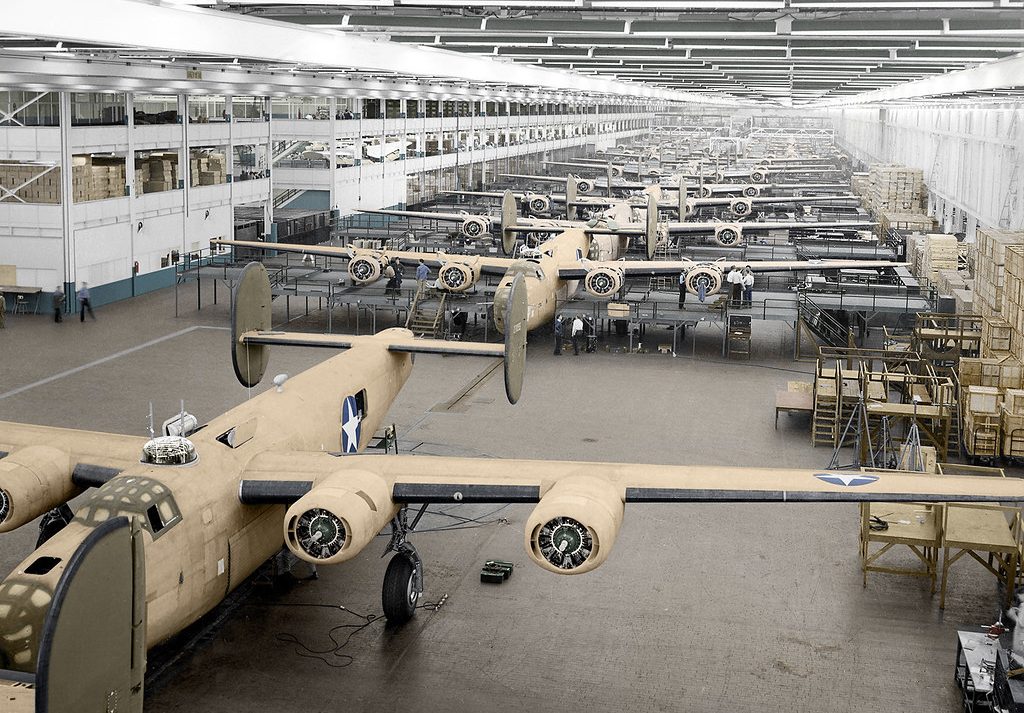
At Willow Run, a vast factory complex located west of Detroit, Ford embarked on one of the most ambitious manufacturing projects ever attempted. The facility was built to produce B-24 Liberator bombers at scale, applying automotive production techniques to aircraft manufacturing. The results were extraordinary.
By the later stages of the war, Willow Run was producing bombers at a rate that astonished military planners and industrial observers alike. At its absolute production peak in the spring of 1944, the Willow Run plant was operating so efficiently that it was turning out a B-24 Liberator bomber every 63 minutes, but during certain optimal stretches, it reached a peak rate of one bomber every 55 minutes. The plant became a powerful demonstration of what was possible when mass production principles were applied to complex products. Yet Ford was far from alone.
General Motors manufactured tanks, aircraft engines and military equipment. Chrysler became a major producer of armoured vehicles and wartime machinery. Thousands of smaller manufacturers throughout the Detroit region supplied critical components, materials and specialised engineering expertise.
Collectively, they formed one of the most powerful industrial networks ever assembled. The effort earned Detroit a central role in what President Franklin D. Roosevelt famously described as the “Arsenal of Democracy”.
More importantly, it demonstrated the true power of the manufacturing systems the city had spent decades developing. Detroit’s factories were not simply efficient; they were adaptable. They could reorganise supply chains, retrain workers and scale production at a pace few regions in the world could match.
The lessons learned during wartime would influence industrial production for decades to come. Advances in logistics, quality control, production planning and workforce coordination all emerged from this period of extraordinary industrial mobilisation.
By the time peace returned in 1945, Detroit’s reputation as the world’s manufacturing powerhouse had never been stronger.
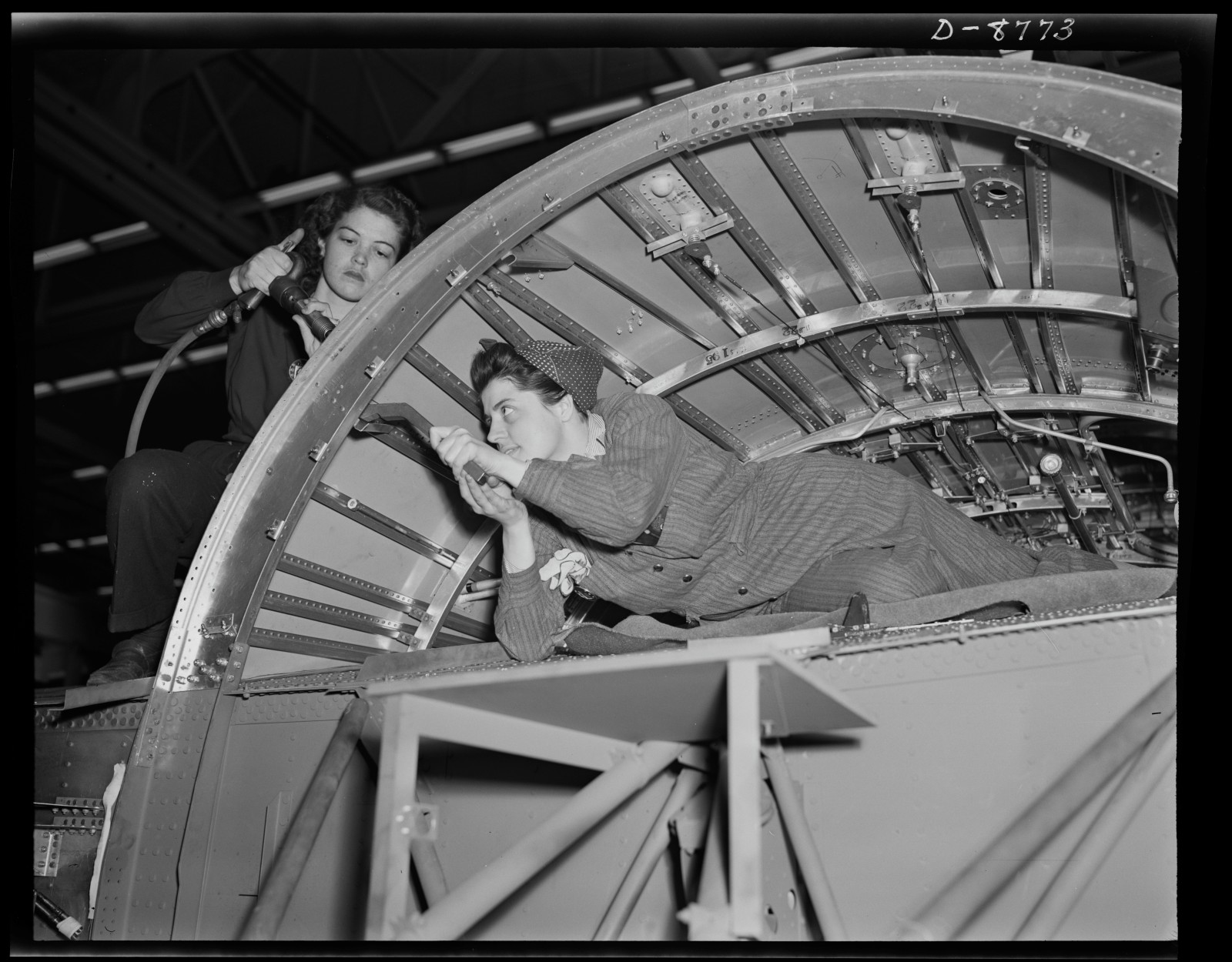
Women played a vital role in Detroit’s wartime manufacturing effort, helping keep production lines running around the clock as factories shifted from automobiles to military equipment. Image credit: Howard R. Hollem / Library of Congress.
The Big Three and the age of industrial dominance
The end of the war marked the beginning of a new era.
As soldiers returned home and the American economy entered a prolonged period of expansion, demand for automobiles surged. New suburbs emerged around major cities. Highway construction accelerated. Car ownership became an increasingly important feature of modern life. Detroit was perfectly positioned to benefit.
At the centre of this industrial boom stood the “Big Three” automakers: Ford Motor Company, General Motors and Chrysler. Together, they represented one of the most formidable concentrations of manufacturing power the world had ever seen.
General Motors became the largest corporation on the planet and a symbol of American industrial might. Ford continued refining the production methods that had transformed manufacturing in the previous generation. Chrysler established itself as a major force through engineering innovation and a growing portfolio of successful vehicle brands.
For much of the post-war period, these companies dominated the American automotive market. More significantly, they influenced manufacturing far beyond it.
Their purchasing decisions shaped supplier networks. Their engineering standards influenced product development. Their production methods became case studies for manufacturers around the world.
Entire regional economies grew around the automotive industry.
Thousands of suppliers produced components ranging from engines and transmissions to glass, rubber, steel and electrical systems. Toolmakers, machine shops, logistics providers and engineering firms all benefited from Detroit’s industrial dominance. The region became one of the most sophisticated manufacturing ecosystems ever created.
What had begun as a collection of automotive pioneers during the early 20th century had evolved into a highly integrated industrial machine capable of producing millions of vehicles annually. The scale was staggering.
Factories stretched for miles. Railways connected production facilities to suppliers and customers. Research and development centres pushed technological innovation forward. New vehicle models emerged at a relentless pace.
Detroit was no longer simply producing cars. It was producing an industrial model that manufacturers around the world sought to replicate.
Manufacturing builds the American middle class
One of Detroit’s most significant contributions was not technological but social. Manufacturing jobs created one of the largest and most prosperous industrial middle classes in history. Factory employment offered wages that enabled workers to purchase homes, cars and consumer goods while providing economic security for millions of families.
Entire suburban communities emerged around manufacturing employment. Schools, shopping centres, restaurants and local businesses flourished thanks to the spending power generated by industrial work. For many Americans, particularly migrants arriving from the rural South, Detroit represented opportunity.
African American workers seeking economic advancement during the Great Migration found employment opportunities in Detroit’s factories. European immigrants and their descendants also built livelihoods through industrial work.
The city’s population continued growing, eventually reaching nearly 1.85 million residents by the 1950 census.
Detroit became a symbol of what industrial prosperity could achieve. Yet beneath this success, tensions were emerging that would shape the city’s future.
The rise of organised labour
Industrial success did not eliminate conflict between workers and employers. In many ways, it intensified it.
As factories expanded and workforces grew, employees increasingly sought greater influence over wages, working conditions and workplace safety. These demands fuelled the rise of organised labour throughout the automotive industry. No organisation became more influential than the United Auto Workers (UAW).
Founded in 1935, the union quickly emerged as one of the most powerful labour organisations in North America. Through strikes, negotiations and collective bargaining agreements, the UAW helped reshape the relationship between manufacturers and workers.
One of the most significant moments came during the Flint Sit-Down Strike of 1936-37. Workers occupied General Motors facilities for more than 40 days, bringing production to a standstill and helping secure formal recognition of the union. The outcome proved transformative not only for the automotive industry but for organised labour across the United States.
Over the following decades, unions secured higher wages, healthcare benefits, pensions and improved workplace protections for millions of manufacturing workers. The impact was profound.
Manufacturing jobs increasingly offered a level of stability and security rarely found elsewhere in the economy. For many families, employment in Detroit’s factories became synonymous with the American Dream.
The relationship between labour and management was often contentious, but it also created a relatively stable workforce capable of supporting large-scale industrial production.
For a time, the model appeared highly successful. Yet as the global economy became more competitive in the decades ahead, both manufacturers and unions would face new pressures that challenged assumptions built during Detroit’s golden age.
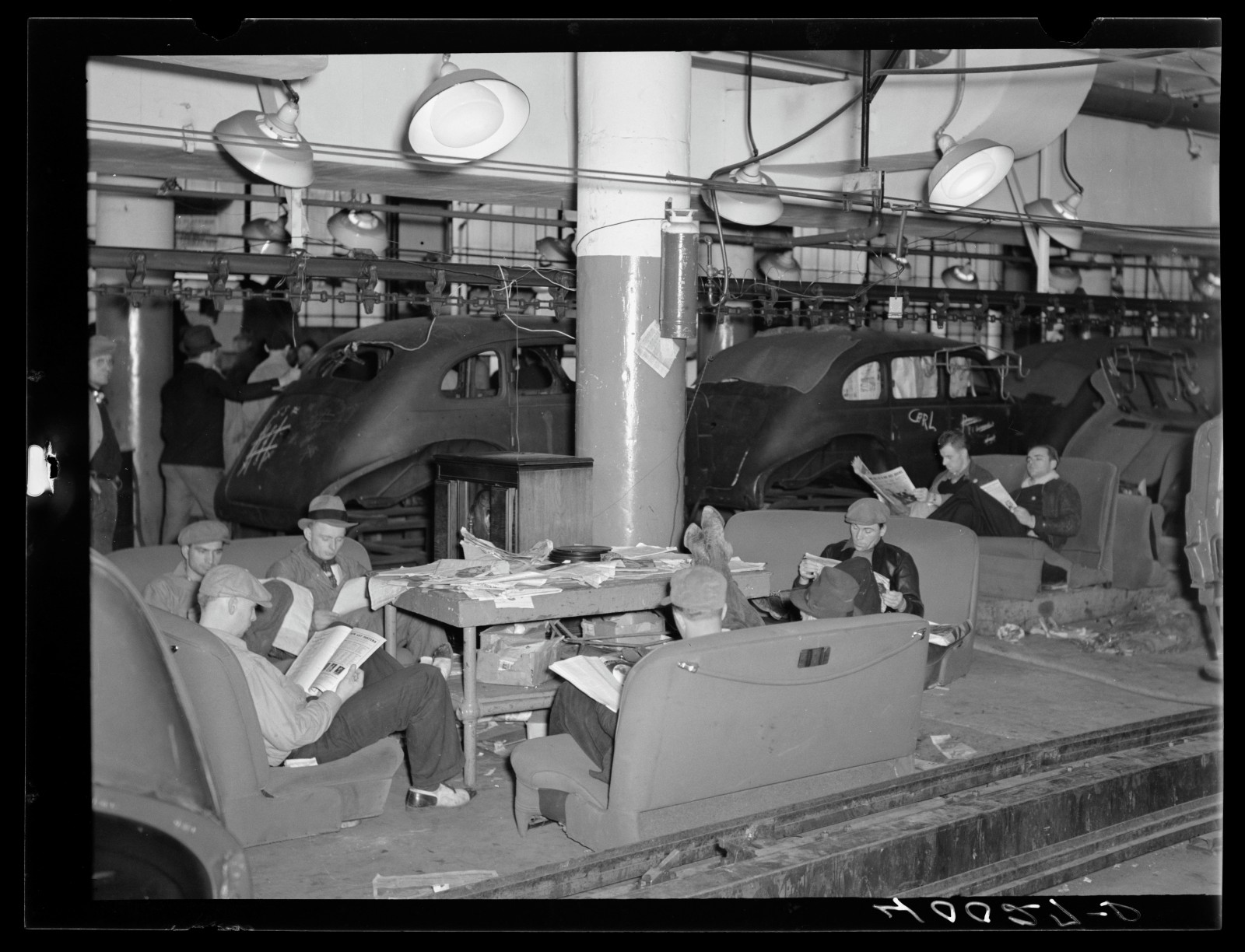
Sitdown strikers in the Fisher body plant factory number three. Image credit: Dick Sheldon / Library of Congress.
Peak Motor City
By the 1950s and 1960s, Detroit stood at the height of its industrial influence.
The city had become the global benchmark for manufacturing scale, productivity and economic impact. The automobiles rolling off its production lines were sold across North America and exported around the world. Manufacturing methods developed within the region influenced industries ranging from aerospace and heavy engineering to consumer goods and electronics.
Detroit’s industrial success became deeply intertwined with American identity. Cars represented freedom, prosperity and technological progress. The annual unveiling of new models became a national event. Automotive advertising dominated television screens and magazines. The products of Detroit’s factories became symbols of a confident, forward-looking America.
Behind the scenes, the industrial ecosystem continued to expand. Research and development centres worked on new technologies and production methods. Suppliers invested in new facilities. Engineering talent flowed into the region. Universities developed programmes to support the growing demand for skilled workers.
The scale of production remained astonishing. Factories operated around the clock, employing hundreds of thousands of workers directly and supporting countless additional jobs throughout the supply chain. At its peak, the automotive industry touched almost every aspect of life in southeastern Michigan.
To many observers, Detroit appeared untouchable. The city had pioneered mass production, helped win a world war and created one of the most successful industrial economies the world had ever seen.
Yet while Detroit focused on refining the systems that had brought it success, competitors elsewhere were quietly developing new approaches to manufacturing. The warning signs were still faint, but they were beginning to appear.
Cracks begin to appear
The challenges facing Detroit did not emerge overnight. There was no single moment when the city’s dominance began to fade. Instead, a series of gradual shifts began reshaping the global automotive landscape during the 1960s and 1970s.
At first, many of these changes appeared insignificant.
Foreign automakers from Japan and Europe occupied relatively small portions of the American market. Their vehicles were often viewed as niche products compared with the large, powerful cars that had become synonymous with Detroit.
Companies such as Toyota, Honda, Nissan and Volkswagen lacked the scale, brand recognition and manufacturing capacity of the Big Three. Or so it seemed.
While Detroit’s manufacturers continued building larger vehicles for a growing domestic market, their overseas competitors were refining different approaches. They focused on efficiency, quality, fuel economy and production flexibility.
Japanese manufacturers, in particular, began developing systems that would later become famous throughout the manufacturing world. Techniques centred around continuous improvement, waste reduction and quality management helped create highly efficient production environments capable of responding quickly to changing market conditions — methods that the world would later come to call ‘lean manufacturing’.
These approaches stood in contrast to the traditional mass-production systems that had defined Detroit’s rise. The differences were not immediately obvious. But over time, they would become increasingly important.
The oil shocks that changed everything
The turning point arrived during the 1970s.
In 1973, the Arab oil embargo triggered a global energy crisis that sent fuel prices soaring. A second oil shock followed later in the decade, creating further uncertainty for consumers and manufacturers alike. Almost overnight, the assumptions that had underpinned much of Detroit’s success were challenged.
Large, fuel-hungry vehicles suddenly became less attractive to consumers concerned about rising petrol costs. Long queues formed at fuel stations across the United States. Buyers increasingly began looking for smaller, more economical alternatives. Many foreign manufacturers were well positioned to meet this demand.
Japanese and European automakers had spent years refining compact, fuel-efficient vehicles that suddenly appealed to American consumers. Brands that had once occupied the margins of the market found themselves attracting growing numbers of customers. Detroit’s manufacturers struggled to respond with the same speed.
The challenge was not simply one of product design. It was also organisational. For decades, the Big Three had optimised their operations around large-scale production systems, extensive supplier networks and long product development cycles. These structures had delivered enormous success, but they were not always well suited to rapid change.
Factories, supply chains and investment strategies had been built around assumptions that no longer reflected market realities. The very scale that had once been Detroit’s greatest advantage increasingly became a source of inertia. Consumers noticed.
Market share began shifting. Foreign competitors gained ground. The foundations of Detroit’s dominance started to weaken.
Automation, productivity and restructuring
At the same time, another transformation was taking place inside the factory. New forms of automation were beginning to reshape manufacturing.
Industrial robots, computerised production systems and advanced machinery promised greater productivity, consistency and efficiency. Manufacturers around the world embraced these technologies in an effort to remain competitive in an increasingly global marketplace. Detroit’s automakers were no exception.
Automation delivered significant benefits. Production became more precise. Quality improved. Manufacturers gained new tools to control costs and increase output. Yet these advances also introduced difficult challenges.
For much of the 20th century, Detroit’s prosperity had been built upon the close relationship between manufacturing output and employment. As factories expanded, they generally required more workers. Automation began altering that equation.
Manufacturers could increase productivity without necessarily increasing headcount. In some cases, fewer workers were needed to achieve higher levels of output. The shift was gradual but significant.
Communities that had long relied upon manufacturing employment began experiencing uncertainty. Workers who had expected stable careers within the automotive industry increasingly faced concerns about restructuring, redundancy and changing skill requirements.
Detroit was not alone in confronting these issues. Industrial regions across North America and Europe faced similar pressures. But because Detroit had become such a powerful symbol of manufacturing success, the changes attracted particular attention. The city was beginning to experience the consequences of a broader transformation sweeping through global industry.
Deindustrialisation and urban decline
By the late 1970s and into the 1980s, the cumulative effects of global competition, changing consumer demand, and automation accelerated a process of deindustrialisation that had quietly begun decades earlier. Manufacturing employment declined.
Factories closed, consolidated or relocated. Population loss accelerated as residents sought opportunities elsewhere. Investment slowed in many parts of the city, while economic challenges placed growing pressure on public services and infrastructure. Neighbourhoods that had once thrived alongside industrial growth faced uncertain futures.
The images that emerged from Detroit during this period became some of the most recognisable symbols of industrial decline in the modern world. Empty factories, abandoned buildings and shrinking communities came to define public perceptions of the city.
Yet the reality was more complex. Detroit had not stopped manufacturing. Automobiles were still being produced. Suppliers continued operating. Engineering expertise remained concentrated throughout the region. What was changing was the nature of industrial success.
The manufacturing model that had propelled Detroit to global dominance during the first half of the 20th century was being challenged by new technologies, new competitors and new economic realities.
For a city whose identity had become so closely tied to industrial supremacy, the transition was especially painful. Detroit became a cautionary tale not because manufacturing disappeared, but because adaptation proved more difficult than many expected.
The city had perfected one era of industrial production. It was less prepared for the next.
Lessons from the Motor City
Detroit’s rise and decline remains one of the most important stories in manufacturing history. Its achievements were extraordinary.
The city demonstrated how industrial ecosystems, engineering talent, supply chains and production systems could be combined to create prosperity on an unprecedented scale. It pioneered manufacturing techniques that transformed factories around the world and helped establish the foundations of modern industrial production.
But Detroit’s story also offers a warning. Success can create confidence. Confidence can create complacency.
The systems that make organisations dominant are not always the systems that allow them to adapt.
While competitors embraced new production philosophies, responded to changing consumer demands and developed more flexible approaches to manufacturing, many of Detroit’s industrial giants remained committed to the methods that had delivered decades of success.
The challenge was not a lack of innovation. It was the difficulty of transforming highly successful organisations when the rules of the game began to change. That lesson remains highly relevant today.
Modern manufacturers face their own period of disruption. Artificial intelligence, advanced robotics, digital twins, electrification, reshoring and supply chain uncertainty are reshaping industrial strategy around the world.
The questions confronting business leaders today are remarkably similar to those that emerged in Detroit half a century ago.
- How do manufacturers remain competitive while adapting to technological change?
- How do they balance operational efficiency with organisational flexibility?
- How do they avoid becoming trapped by systems that once delivered success?
Detroit confronted those questions before many others. Its experience serves as a reminder that industrial leadership is never permanent. It must be continuously earned through innovation, investment and adaptation.
Setting the stage for reinvention
By the end of the 1980s, many observers viewed Detroit as a city in irreversible decline.
The Motor City that had once represented the pinnacle of industrial achievement had become, in the eyes of many, a symbol of what happens when industries fail to evolve quickly enough. Yet that interpretation tells only part of the story.
Beneath the headlines, Detroit retained many of the advantages that had fuelled its original rise: world-class engineering talent, a deep manufacturing heritage, extensive supplier networks and an unrivalled understanding of industrial production.
Those strengths would eventually provide the foundations for a new chapter.
The technologies reshaping Detroit today—automation, robotics, electrification, artificial intelligence and smart manufacturing—are not replacing the city’s industrial heritage. In many ways, they represent its latest evolution.
Before Detroit could become a model for industrial renewal, however, it first had to confront the realities of decline.
In the final instalment of this series, we will explore how Detroit reinvented itself for the 21st century, examining the rise of advanced manufacturing, electrification, mobility technologies and smart factories that are helping transform the Motor City from a symbol of industrial decline into a blueprint for industrial reinvention.
Never miss a North American manufacturing story
Sign up for our free weekly North American Manufacturing Digital Briefing to receive the latest industry news, insights and analysis direct to your inbox every Monday.