

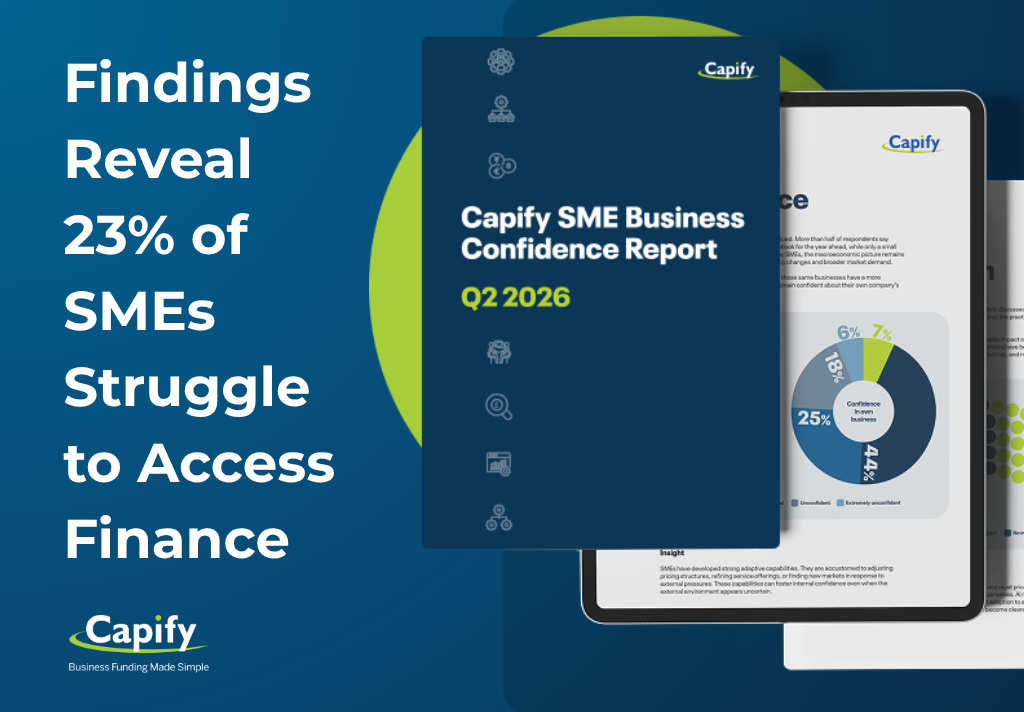
Capify’s latest Business Confidence Survey (Q2 2026) reveals that the percentage of businesses finding it very difficult to access finance has more than tripled, rising from 7% in Q1 to 23% in Q2. With the added pressures of late payments from customers (up 10% since Q1), this poses a dilemma for UK SMEs.
Access to finance is becoming more difficult
As well as the percentage of businesses finding it very difficult to access finance tripling, the number of respondents describing access as very easy has almost halved. This suggests that more and more business owners are encountering stricter lending conditions, potentially restricting crucial business growth.
This also follows the news announced by high street banks earlier this year that they are tightening their lending options for UK SMEs, stating the higher risks associated with this type of lending was proving to be too risky.
One particular reason for this could be as a result of late customer payments. With one late payment from a customer having the potential to stop a business from paying their bills, there is a risk that the business’s credit score could be negatively affected, making them appear a riskier proposition to traditional lenders.. All due to no fault of their own. In fact, 38% of businesses say payment delays have increased and more than 70% of SMEs say delayed payments affect their business, disrupting cash flow, delaying investment decisions and increasing the time managing finances.
This is particularly notable as the survey revealed that confidence is improving elsewhere. More businesses expect revenues to increase over the coming months and confidence in both the economy and their own businesses has strengthened since the first quarter. However, greater optimism does not necessarily make it easier to secure finance. For many SMEs, accessing funding remains one of the biggest barriers to turning plans into reality.
A shift towards alternative lenders
The report indicates SMEs are broadening their search for funding, with alternative finance providers becoming a more attractive option than loans from traditional banks. Overdrafts have overtaken credit cards as the most common source of finance, while business owners are increasingly willing to consider lenders beyond the high street, including invoice financing and asset-based lending. This suggests growing awareness of the wider range of finance options available and a greater willingness to choose products that better suit their needs.

This does not suggest businesses are abandoning banks altogether. Rather, they are recognising that different funding providers can meet different needs. When speed, flexibility or certainty are priorities, many SMEs now explore a wider range of options.
What is the biggest impact on business affordability
Although the UK economy is showing small signs of improvement, and the latest announcements from the government reveal plans to help both businesses and working people, we are still a long way off from the end of the cost of living crisis. One of the biggest cost factors reported by businesses is the cost of employment, which is directly impacting business growth.
Nearly 60% of businesses intend to keep staffing levels the same over the next six months, with less than 25% expected to recruit. This data suggests that this decision is less about the business’s confidence in themselves and more about the affordability of hiring. Employment-related taxes are the single biggest factor influencing recruitment decisions, followed closely by wage increases and employer legislation.
Skills are also an issue, with a quarter of employers citing lack of skilled candidates as their biggest staffing challenge. This means that businesses will need to invest more into new hires to ensure they are trained and equipped to help the business grow.
Why funding matters more than ever
The most recent Business Confidence Report illustrates that businesses remain ambitious despite the continued uncertainty in the UK economy. Around 50% of respondents expect a revenue increase over the next six months, and many continue to invest in equipment, marketing and technology.
One of the most important parts of enabling this growth is access to finance, especially when cash flow is tight. No matter if a business is looking to invest in new equipment, recruit staff or improving working capital, being able to quickly secure funding can help businesses to act of opportunities instead of letting them slip away.
As the funding landscape changes and becomes more complex, businesses should think beyond simply securing a loan. The right finance provider should understand the pressures facing UK businesses and provide funding that matches the way they operate.
Read the latest findings
The Q2 2026 SME Business Confidence Report from Capify explores how UK SMEs are reacting to increasing costs, evolving market conditions and changing funding needs.
Download the report to explore the full findings, or check your eligibility to see how flexible business finance could support your next stage of growth.
 Capify is one of the UK’s leading alternative finance providers. We understand the difficulty of running a business and want to help SMEs quickly access the flexible funding they need.
For more articles like this, visit our Leadership channel.