

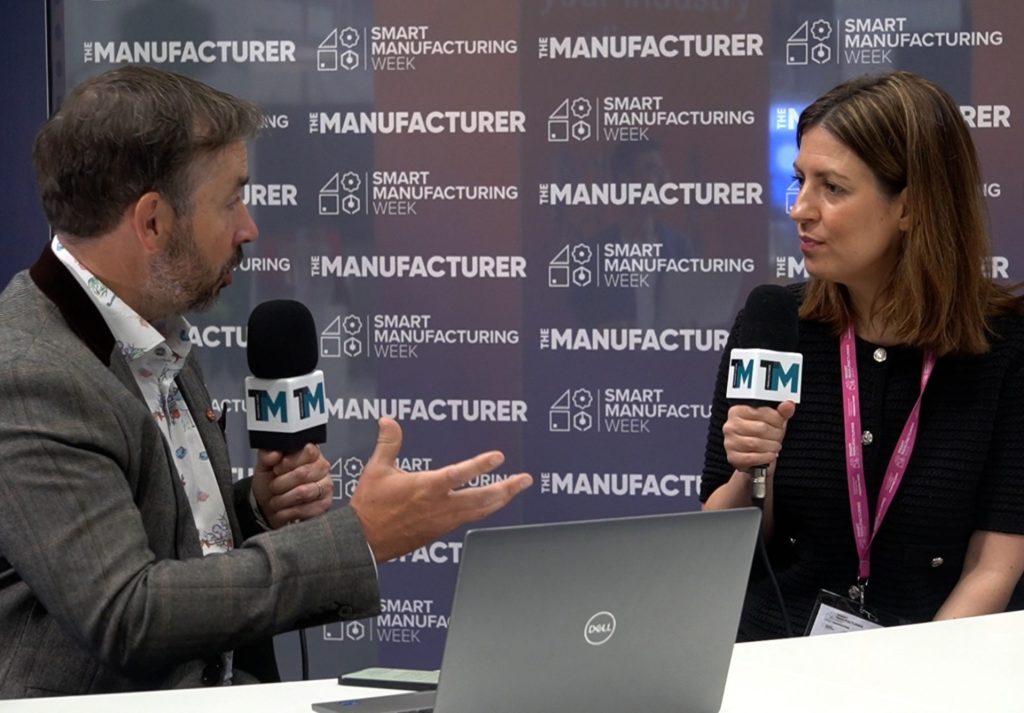
Last summer The Manufacturer sat down with Caroline Keohane, Head of Industry Growth at the Food and Drink Federation (FDF) to discuss the launch of the new Food and Drink Technology Taskforce. This is a collaboration that brings together experts from technology providers, manufacturers, academia, catapults and finance, to work on unlocking the potential £14bn growth opportunity for the sector which was identified in the federation’s 2025 Future Factory Report.
This report identified a number of barriers preventing businesses in the food and drink sector from adopting technology and the taskforce – which includes the likes of NatWest Bank, ABB Robotics, Warburtons and Premier Foods – is now looking at the next phase of that journey which will address those issues and pinpoint the practical actions the industry can take to realise its potential.
This next step takes the form of a follow up report, unsurprisingly named Future Factory II, where the taskforce sets out the priorities that will accelerate technology adoption and deliver measurable benefits for businesses. We caught up with Caroline to get an update.
Key takeaways
-
The sector is shifting from strategy to action
-
Technology is central to unlocking a £14bn growth opportunity
-
SMEs face the biggest barriers – and are the main focus
-
Skills, AI and robotics adoption are accelerating – but gaps remain
-
Policy and funding support lags behind the sector’s importance
FAQs
-
What is the Future Factory initiative and why does it matter?
-
What is the role of the Food and Drink Technology Taskforce?
-
What are the main barriers to technology adoption in the sector?
-
How can SMEs benefit from the Future Factory II agenda?
-
Why is government support and funding a key issue for food and drink manufacturers?
Late in 2025, the federation held its annual Food and Drink Investment Summit, where, along with the launch of the second instalment of report, the FDF also introduced its ambition for growth, which sets out the vision for the food and drink manufacturing sector over the next decade.
Caroline commented: “As a sector we want to double business investment to around £12bn, grow our exports by a third to £35bn and generate £50bn pounds worth of GVA; this all feeds into the growth opportunity that we had identified in the first version of the report. A key part of this future vision for the sector is to also make the UK a global hub for food and drink R&D and healthier product innovation.”
To underpin this ambition for growth, the FDF has recognised the role of technology as a key enabler. As such, Caroline highlighted the importance of taking the insights, findings and learnings from the first report and moving into an implementation phase so that new and emerging technology can be a driving force for change and transformation.
“We’re definitely moving from insight to implementation,” she added. “We know the opportunities that exist and we know the barriers in terms of the commercial environment, skills and technology integration. It’s now all about practical action through collaboration, to raise awareness of what’s out there, and to help SMEs in particular.”
Key characteristics of the food and drink sector
F&B is a dynamic and diverse sector, influenced greatly by changing consumer demand which can drive frequent changes to stock-keeping units and production configurations. Raw materials are also inherently variable, influenced by weather, geography and global supply conditions, and this is an area where technology has huge potential impact when it comes to predicting ingredient anomalies, disruption and variations, and adapt recipes accordingly.
While some of this technology is undoubtedly coming on board, gaps still exist and, in the commercial environment, businesses are often operating on shorter-term contracts compared to other manufacturing sectors that have longer lead times. This can create a challenging environment with which to put forward a business case for long-term investment.

Like all other sectors within manufacturing, food and beverage is seeing a spike in demand for skills in relation to AI, digital and data, creating a highly competitive landscape. However, this is another area where the FDF is being proactive, as Caroline continued: “We’ve developed a programme with Wigan and Leigh College and the Greater Manchester Combined Authority to multi-skill our engineers from mechanical to electrical and vice-versa, and then also taking our technical operators and upskilling them with some engineering capabilities, which all helps with accelerating tech adoption.”
Indeed, the sector saw a 60% increase in robotic adoption over the last 12 months and food and drink businesses are increasingly deploying AI, not only in manufacturing processes but also in new product development.
For example, the FDF has begun work with a start-up that is deploying an AI platform to help reduce food waste. Zest’s platform reads data in real time and identifies pinch points where waste is occurring. The company has worked with the likes of Nestlé which managed to reduce edible food waste by 87% over a two week period at one pilot site. “Examples like this are practical applications of AI having a real world impact,” Caroline added.
The Industrial Strategy – missing the mark?
As food and drink wasn’t identified as an advanced manufacturing sector in last year’s Industrial Strategy announcement, Caroline feels that an opportunity has definitely been missed. “We’re the UK’s largest manufacturing sector, we’re located in every part of the country, and so we have massive productivity growth potential. Not only that, but food security is national security.”
This is yet another area where the federation have been active in addressing the challenges that exist; trying to advocate for the sector and make sure that businesses have access to the support programmes that were announced as part of the Industrial Strategy.
And this is by no means idle talk. The FDF has already managed to secure some vital wins in that area, with food and drink manufacturers now able to access the Engineering Skills Package, and the robotics adoption hubs due to come on stream later this year.
While this is a firm foundation, Caroline admits that more could and needs to be done, particularly around energy. Like most manufacturing businesses in the UK, rising energy costs have been extremely prohibitive in recent years, yet, as it stands, businesses in the food and drink sector won’t be able to access the support offered through the British Industrial Competitiveness Scheme. As such the FDF will be lobbying government so that businesses in the sector can gain access to that programme.
Next steps
Indeed, the two priorities outlined in the Future Factory II Report are around setting up support programmes and centres of excellence, and the development of a technology adoption blueprint. Caroline outlined what needs to happen to make these priorities a reality and what they would both look like in practice?
“The first step is to tap into existing aeras of support and make sure we get our fair share of what’s already out there,” she said. “In particular, the Made Smarter Adoption Programme, and we’ve had some real success stories where food and drink SMEs have benefited from that support.
“We need more of that and it’s important to raise awareness that programmes like this aren’t the sole domain of the more traditional manufacturing or engineering companies, and that food and drink businesses can benefit too.”
Centres of excellence already exist such as the Advanced Food Innovation Centre at Sheffield Hallam, the National Food Manufacturing Centre at the University of Lincoln, AMRC Cymru, as well as the various catapults, and the FDF is now aiming to bring all those together to create demonstrator hubs where businesses – particularly SMEs -can trial and test new technologies in a food grade environment.

Furthermore, the adoption blueprint aims to be a step-by-step guide covering all the key factors a business needs to think about when building a successful business case for technology adoption – whether that be access to finance or taking on apprentices.
“We’re looking to tap into the expertise that we’ve already got within the taskforce and bring it all into one place,” added Caroline. “We know that businesses really value independent advice. Our members might not feel as though they are the most informed of consumers when they are reaching out to tech providers, so having that information and support to hand is really beneficial?”
Like the majority of manufacturing sectors, the vast majority of businesses in the food and drink space are SMEs (97%) and Caroline emphasised the need to prioritise those companies that don’t necessarily have the time and resource to invest in digital transformation projects.
“That’s why the collaboration piece is so important and helpful,” she added. “The businesses that are part of the taskforce have a lot to offer, and they can share their experiences and the journey they’ve been on to help smaller businesses that are unsure of their own next step.
“We’re such a diverse sector – a bakery will have very different needs to a soft drinks company for example – however, there are common themes across sub sectors. As such, we’ll be running challenge workshops in 2026 aimed at identifying common pinch points across the industry so that businesses can come together and tackle those challenges together. The takeaways from these will then also feed into the Technology Adoption Blueprint.”
The food and drink roadmap for 2026
As mentioned, 2026 will be about moving from insight to implementation in the food and drink sector. “We will be moving forward with the blueprint and the other areas around the support programmes,” said Caroline. “We also want to work in partnership with government to deliver our ambition for growth.
“We’ve set out some big numbers so we’ll be looking at the actions we need to take, with other government departments, to realise that ambition. With the robotics adoption hubs, the Growth and Skills Levy, and Made Smarter Innovation funding, we know that there’ll be pots of money available in 2026 and we want to make sure that we can come together and competitively bid for those funds.”
To put this into perspective, food and drink manufacturers receive around 0.1% of UK government funding for R&D – compared to aerospace which receives around 12% – and with some strategic challenges around health and sustainability, it will be important for the sector to secure a more significant piece of that pie moving forward.
The message from industry is clear: the food and drink manufacturing sector understands the opportunity, acknowledges the challenges, and is ready to act. With collaboration, practical guidance and targeted support, the transition from insight to implementation is well underway.
As the Future Factory agenda evolves, the focus will be less on reports and more on results – embedding technology, boosting productivity and ensuring that the UK’s largest manufacturing sector remains competitive, resilient and fit for the future.
For more articles like this, visit our Digital Transformation channel