The University of Sheffield Advanced Manufacturing Research Centre (AMRC) is marking its 25th anniversary with ambitions to quadruple its economic impact over the next decade, building on a quarter-century of collaboration that has helped transform South Yorkshire into a major advanced manufacturing hub.
Founded in 2001 on the site of the former Orgreave Colliery and coking works, the AMRC began as a partnership between the University of Sheffield, aerospace manufacturer Boeing and local industrialists, with a team of just eight people. Its original mission was to bridge the gap between university research and the practical needs of manufacturers, helping businesses develop and adopt technologies that could improve industrial productivity.
Today, the centre employs more than 570 researchers and manufacturing specialists across South Yorkshire, Wales and Lancashire. As a founding member of the High Value Manufacturing Catapult, it works with industry to de-risk innovation, develop new manufacturing capabilities and accelerate the adoption of advanced technologies.
From industrial decline to advanced manufacturing
Professor Keith Ridgway, one of the centre’s founders, established the initiative alongside local businessman Adrian Allen, with the University of Sheffield and Boeing recognising the potential for machining research to generate wealth and employment in a struggling industrial community.
We started with a team of eight people. The aim was always to use the research in machining as a way of creating wealth in a depressed region.
Professor Keith Ridgway, AMRC co-founder
The former colliery site has since become part of the Advanced Manufacturing Park, now home to a concentration of major manufacturing businesses and research facilities, including Boeing, Rolls-Royce and McLaren, as well as specialist suppliers and smaller manufacturers.
The AMRC estimates that its work has helped attract £350m in inward investment to South Yorkshire and supported the creation of more than 2,500 manufacturing jobs in the regional cluster. Its figures also highlight 2,200 apprentices recruited through its work with approximately 400 businesses.
The centre has also been instrumental in boosting the region’s productivity. Indeed, analysis by the Northern Powerhouse Partnership found that productivity in Rotherham increased by 64% between 2004 and 2023, with the Advanced Manufacturing Park and the AMRC playing significant roles in that growth.
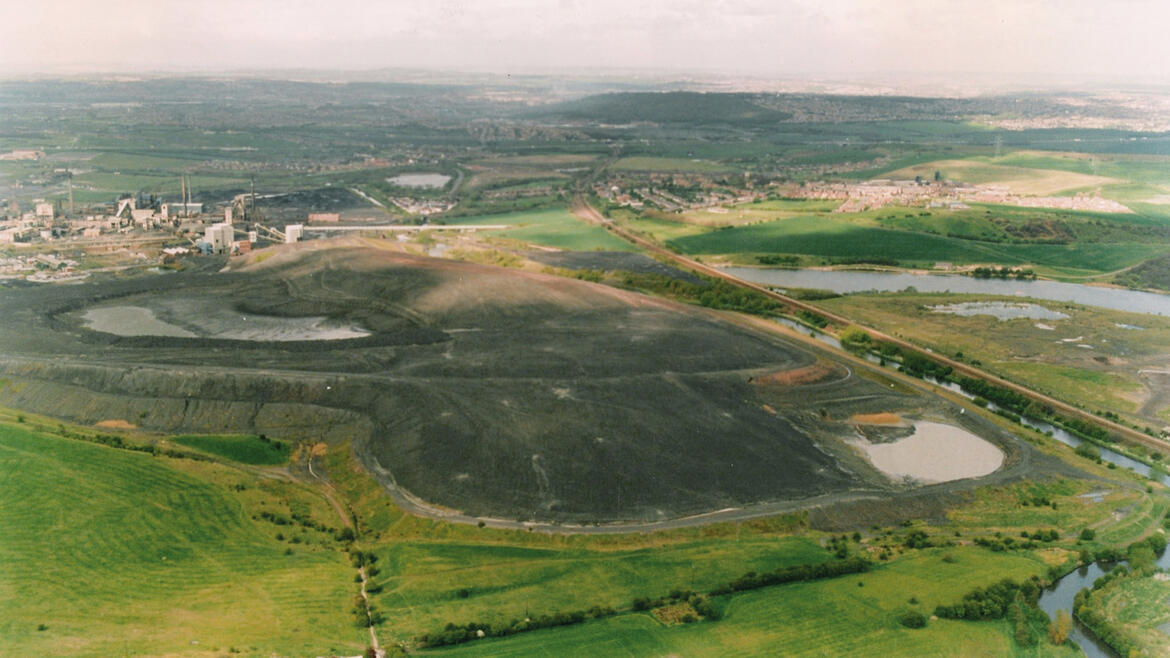
The University of Sheffield Advanced Manufacturing Research Centre (AMRC) sits on the site of the former Orgreave Colliery and coking works in South Yorkshire. Image credit: AMRC.
Turning research into industrial impact
More than 1,000 businesses benefit directly from the AMRC’s collaborative approach to innovation each year, according to the centre. Its work ranges from machining and automation to digital manufacturing, composites and advanced production processes, with an emphasis on testing technologies before they are deployed on factory floors.
The results can be seen in investment decisions made by manufacturers operating in the region. The AMRC says its innovation ecosystem was a driver behind Boeing’s decision to invest £40m in 2018 to locate its first European factory in Sheffield. More recent announcements include McLaren’s £40m expansion of its composites technology centre — expected to create 300 jobs — and Rolls-Royce’s £19m investment in an Advanced Blade Casting Facility in the area.
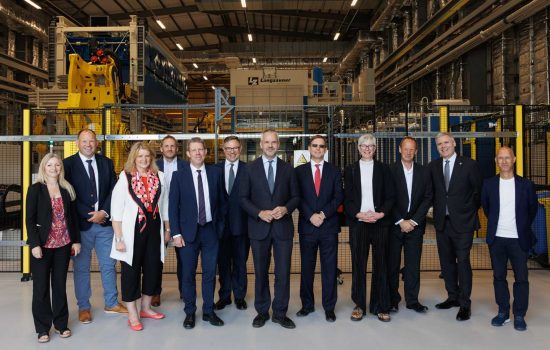
The centre’s latest major research initiative is the £54m Composites at Speed and Scale (COMPASS) facility, which supports the development of advanced composite manufacturing capabilities. Boeing’s Chief Technology Officer, Lane Ballard, described its opening as the latest chapter in the companies’ long-standing partnership, highlighting the importance of combining research, skills and supply chains.
The AMRC is also supporting small modular reactor development with Rolls-Royce SMR, helping build the manufacturing expertise required for emerging nuclear technologies.
Katherine Bennett CBE, Chief Executive of the High Value Manufacturing Catapult, highlighted the AMRC’s role in connecting research with industrial application.
Throughout my career in aerospace, I have seen first-hand the reputation the AMRC has built for turning world-class research into real-world impact through close collaboration between industry, academia and government, from South Yorkshire to the North West and Wales.
Katherine Bennett CBE, Chief Executive of the High Value Manufacturing Catapult
A new strategic direction
As it enters its next chapter, the AMRC is refocusing its research and technology capabilities on three priority areas: aerospace, defence, and nuclear and clean energy. The move reflects the importance of these sectors to the UK’s industrial strategy, including the need to strengthen domestic supply chains and increase manufacturing capacity in strategically important industries.
For 25 years, our mission has been to take high-risk R&D off industry’s shoulders so manufacturers can start, scale, and stay in the UK.
Our goal for the next decade is to quadruple our historical impact. We aren’t just doing research – we are driving up shop-floor production rates, shortening technology adoption cycles and ensuring critical supply chains remain firmly anchored in the UK.
Professor Ben Morgan, Chief Executive of the AMRC
The AMRC is already applying these capabilities across its priority sectors. In aerospace, the COMPASS facility supports the development and scaling of composite manufacturing technologies, while its work with Rolls-Royce SMR is helping develop factory-based production techniques for nuclear power stations. In defence, its automation and advanced engineering expertise is intended to help manufacturers increase production rates and strengthen supply chain resilience.
The AMRC’s next challenge is to translate its research capabilities into greater industrial output, investment and employment. Its ambition to quadruple its impact over the next decade will depend on helping manufacturers adopt new technologies at scale while strengthening the UK’s capabilities in strategically important sectors.
For more articles like this, visit our Innovation channel