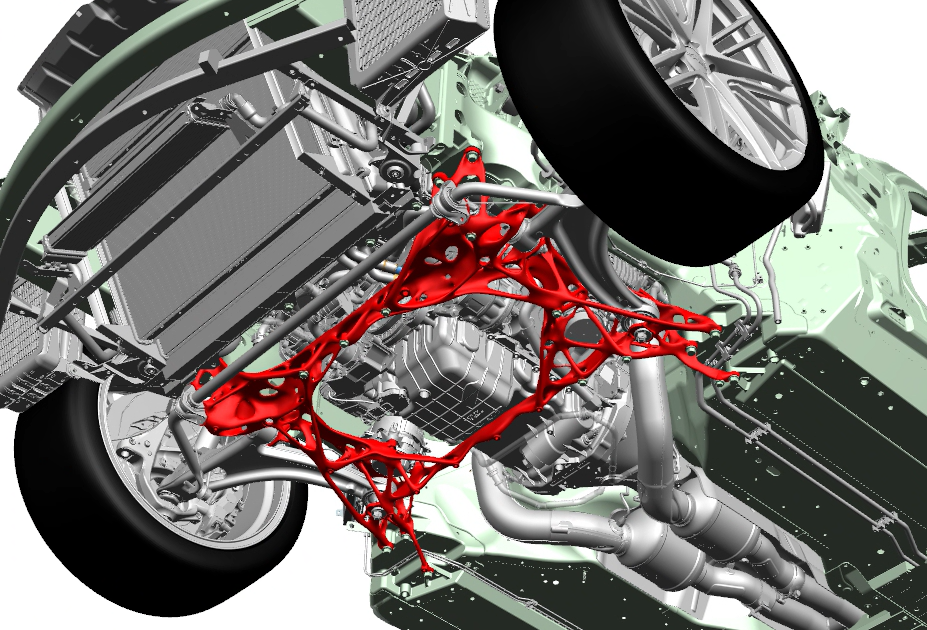
A UK-led consortium has unveiled advanced cast aluminium vehicle subframes that could help transform automotive manufacturing by significantly reducing weight while cutting development costs and speeding up production.
The components, developed through the £5.8m Performance Integrated Vehicle Optimisation Technology (PIVOT) project, are 17% lighter at the front and 35% lighter at the rear than the structures they are designed to replace on a demonstrator vehicle for a major British OEM.
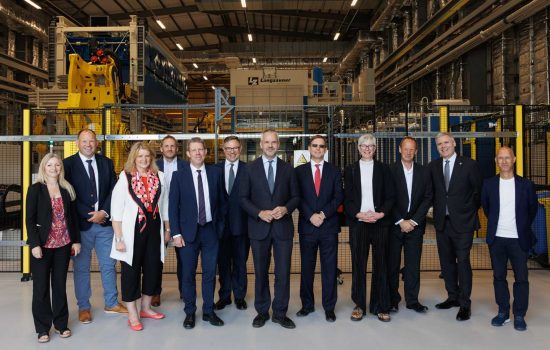
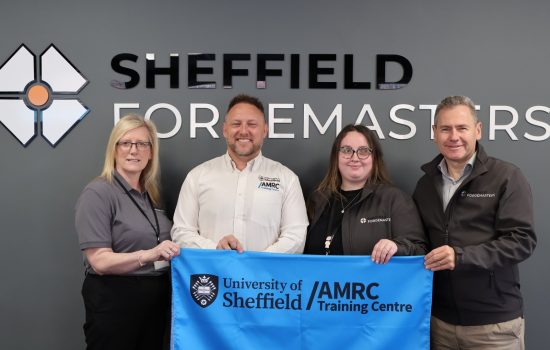
The breakthrough was revealed at the “Casting the Future of Aluminium” event, hosted by the University of Sheffield’s Advanced Manufacturing Research Centre (AMRC), highlighting the potential of advanced casting and virtual engineering to support the next generation of lightweight, high-performance vehicles.
Led by Coventry-based foundry Sarginsons Industries, the consortium combined proprietary aluminium casting expertise with topology optimisation software from Siemens to redesign the structural components.
The approach draws on more than two decades of material testing and microstructural analysis, enabling engineers to accurately predict how aluminium will perform throughout the casting process before production begins. The technology allows structural castings to be validated in virtual crash simulations, reducing reliance on costly physical testing while eliminating unnecessary material from designs.
Gavin Shipley, technical director at Sarginsons Industries, said: “A physical crash test can cost up to £1m every time you run one. For decades, the only way to be safe was to over-engineer, adding mass and material to compensate for uncertainty.
“What we’ve demonstrated is an alternative. By combining virtual engineering, AI and advanced casting expertise, we’re able to understand precisely how a component will behave before any metal is poured, giving manufacturers the confidence to design for real performance rather than worst-case assumptions.”
He added that the technology was “unlocking entirely new possibilities for lighter, stronger and more efficient vehicle structures”.
Following the successful virtual development programme, the front subframe will now progress to tooling, before undergoing physical durability testing and track evaluation on demonstrator vehicles to validate the digital engineering approach.
PIVOT (Performance Integrated Vehicle Optimisation Technology) is backed by the Advanced Propulsion Centre and brings together Sarginsons Industries, Aston Martin, Siemens, Brunel University and GESCRAP to accelerate innovation in advanced aluminium manufacturing.
The project demonstrates how UK expertise in digital engineering, casting and materials science is helping develop lighter, more sustainable vehicle structures while strengthening the country’s advanced manufacturing capabilities.
For more articles like this, visit our Innovation channel