

Jaguar Land Rover’s Reimagine Strategy, launched in 2021, set out a bold ambition: to redefine modern luxury with sustainability at its core and achieve net zero across its products, operations and supply chain by 2039. Four years on, that ambition remains firmly intact, even as the path to get there has evolved.
Speaking with The Manufacturer last year, Alison Nuttall, Head of Sustainability Global Affairs at JLR, outlined how the strategy has matured from vision to action. Built around three pillars – Planet Regenerate, Engaged for Good and Responsible Business – Reimagine has become embedded into everyday decision-making across the organisation. Since its launch, JLR has already reduced absolute carbon emissions by more than 20%, demonstrating that progress is possible even amid global disruption.
Electrification remains central to JLR’s journey, with milestones set for BEVs across all brands by 2030, zero tailpipe emissions by 2036 and full net zero by 2039. However, slower-than-expected market adoption has reinforced the need for flexibility. Importantly, the destination has not changed – only the route.
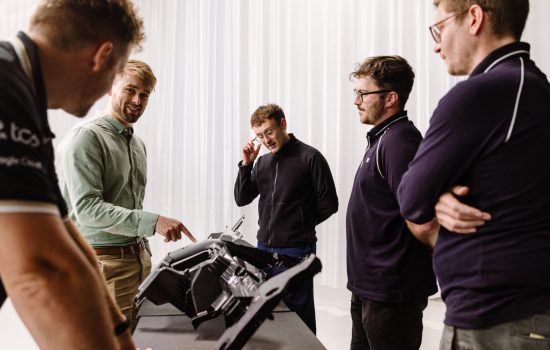
Technology is proving a critical enabler. From AI and smart metering to digital twins that allow factories and supply chains to model change without disruption, data has become the backbone of JLR’s sustainability transformation. Nowhere is this more evident than at the Circularity Lab in Gaydon, where vehicles are dismantled, redesigned and reimagined to improve end-of-life recyclability and material recovery.
Crucially, JLR rejects the notion that sustainability and profitability are at odds. Efficiency, transparency and long-term thinking are helping the business build resilience while remaining commercially competitive. As Nuttall emphasised, sustainability is not a bolt-on KPI, but a cultural shift – one rooted in progress over perfection. For JLR, that mindset is shaping not just cleaner vehicles, but a more future-ready business.
For more articles like this, visit our Sustainability channel