
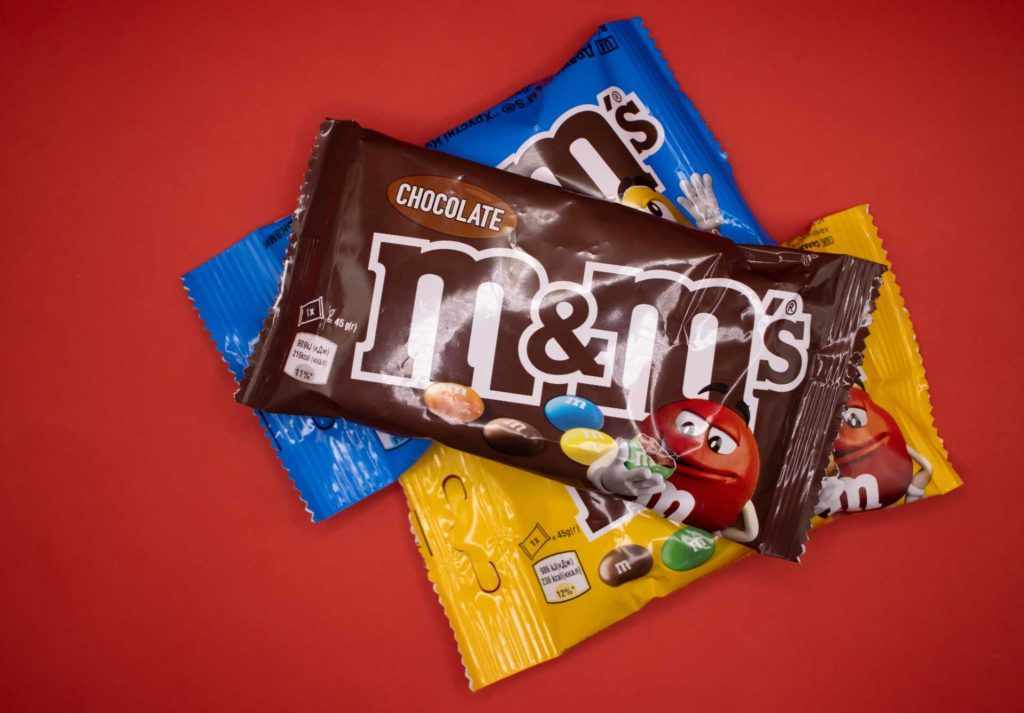
A batch of M&M’s sweets has been urgently recalled across the UK after food safety officials warned of a potentially serious health risk linked to incorrect labelling.
The recall affects a specific ‘Pipoca’ (popcorn-flavoured) variety of the popular chocolate, which was originally produced for the Brazilian market but later repackaged and sold in the UK. According to the Food Standards Agency (FSA), the product contains allergens including peanuts and gluten that were not properly declared on the packaging.
Officials say the mislabelling could pose a “potentially life-threatening” danger to people with allergies. Even small traces of peanuts or gluten can trigger severe reactions such as anaphylaxis, a rapid and serious condition requiring immediate medical attention.
Many businesses today are in the sub-optimal condition of a recalled product still progressing through the supply chain, moving from warehouses to lorries bound for stores, and ultimately onto shelves and into shopping baskets. Days and weeks delay can be the reality before steps are taken.
Jamil Ahmed, Engineer, Solace
The recall has been issued by wholesaler 3D Trading, which distributed the affected products across England, Scotland and Wales. Consumers who have purchased the sweets are being strongly advised not to eat them and to return them to the place of purchase for a full refund.
The FSA has also worked with allergy support organisations to spread awareness of the issue, while retailers have been instructed to display recall notices in stores.
Mars, the manufacturer of M&M’s, has clarified that the recall only affects repackaged products handled by third parties, and not officially produced and labelled items, which remain safe for consumption.
The incident highlights ongoing concerns around food labelling and the risks posed by improperly repackaged goods. Authorities are urging consumers—particularly those with food allergies—to remain vigilant and carefully check product information before consumption.
Jamil Ahmed, Engineer at Solace, a company specialising in event-driven architecture and real-time data movement, argues that the best solution for spotting supply chain issues before they reach the shelves, is real time data. He argues that: “A real-time flow of data can be the key differentiator in helping avoid these potentially catastrophic outcomes. By enabling a supply chain based on seamless data movement, organisations could carry out product recalls with pinpoint accuracy, receiving information about bad batches of certain products instantaneously.
“With real-time data, places can react faster to remove recalled items before it’s put into a shopper’s basket, or perhaps even intercept the product before it leaves the factory.
Instead of this ideal scenario, many businesses today are in the sub-optimal condition of a recalled product still progressing through the supply chain, moving from warehouses to lorries bound for stores, and ultimately onto shelves and into shopping baskets. Days and weeks delay can be the reality before steps are taken.
“Retailers hold huge quantities of data across various systems, be they for loyalty management, stock control, ecommerce services, supplier management, etc. The availability of data is not their challenge. Rather, what is missing is the ability to use this data and integrate it better across different systems to create a more joined-up ‘omnichannel’ picture of the business.”
For more articles like this, visit our Leadership channel