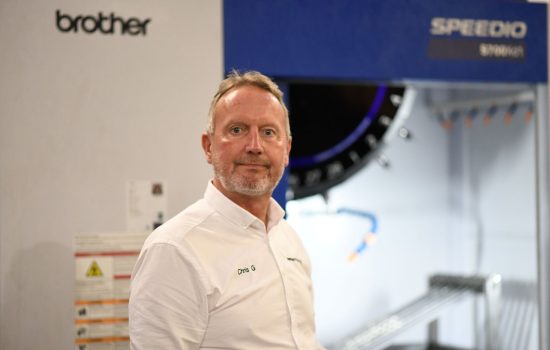
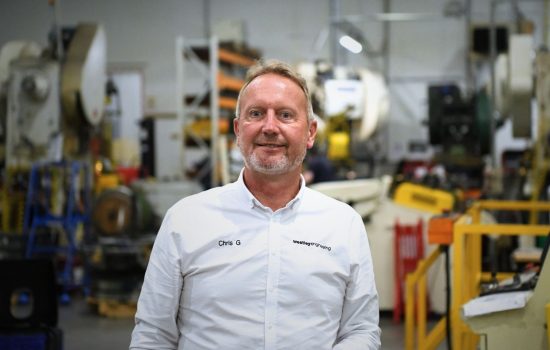
In this latest guest blog post for The Manufacturer, Westley Engineering’s Christopher Greenough explains why effective manufacturing leadership means spending time on the shop floor, listening to employees, challenging established practices and building a culture of trust and continuous improvement.
I’ve spent nearly 30 years in manufacturing, and one thing I’ve learned is that you can’t run a factory from a spreadsheet. And you certainly can’t lead one from a meeting room.
Don’t get me wrong. Meetings matter. Budgets matter. KPIs, forecasts, strategy reviews and management accounts all matter. But there comes a point where we can become so busy managing the business that we stop seeing the business.
For me, some of the most valuable time in any manufacturing week is spent walking the shop floor. Not conducting an audit. Not carrying a clipboard. Just talking to people.
The answers are often already there
One of the great things about manufacturing is that problems are normally visible. A machine is waiting. Material isn’t available. A job has been stopped. Parts are building up between operations. An operator is struggling with a process. A quality problem keeps returning.
The interesting thing is that the people doing the job often already know why. Ask an operator what’s slowing them down and they’ll probably tell you. Ask what would make the process easier and there’s a good chance they’ve already thought about it.
That’s why I believe one of the most powerful questions a manufacturing leader can ask is incredibly simple: “What’s stopping you doing your job better?”
Then listen.
Leadership isn’t having all the answers
Earlier in my career, I probably thought being a manager meant having the answers. Experience teaches you something different. Good leadership is often about asking better questions.
- Why are we doing it this way?
- Why does that part travel across the factory three times?
- Why are we producing batches of 500 when the customer only needs 100?
- Why does this machine keep stopping?
- Why are we inspecting quality into the product rather than controlling the process?
And my personal favourite: “We’ve always done it that way.”
Those six words have probably cost British manufacturing millions over the years.
Get out of the office
As businesses grow, it’s surprisingly easy for managers to become disconnected from what’s actually happening. Emails multiply. Teams calls appear. Reports get longer. Meetings create more meetings.
Before you know it, you’ve spent eight hours discussing productivity without actually watching anything being produced. I’ve been guilty of it too. That’s why I increasingly believe leaders have to deliberately create time to be visible.
Walk the factory. Say good morning. Ask how the job is going. Look at the boards. Talk about yesterday’s problems. Recognise someone who’s done something well.
And importantly, don’t only appear when something has gone wrong. If the only time the MD walks towards someone is when there’s a problem, people quickly learn to dread seeing the MD. That’s not leadership.
Visibility builds trust
Being visible doesn’t mean interfering with every decision. Managers have to allow people to manage. But there is a huge difference between empowering people and becoming invisible.
People want to know what’s happening in their business. They want to understand why decisions are being made. And they want to feel that the person leading the company understands what their working day actually looks like.
You won’t get that from a monthly KPI report. You get it from conversations.
Manufacturing is still a people business
We talk constantly about Industry 4.0, AI, automation, robotics and digital factories. And rightly so. The factories of the future will undoubtedly be more automated, connected and data-driven.
But leadership isn’t becoming less important. I’d argue it’s becoming more important. Because ultimately somebody still has to create the culture. Somebody has to set the standards. Somebody has to encourage improvement. Somebody has to make people believe that what they’re doing matters.
The best manufacturing leaders I’ve met understand that their job isn’t simply to manage numbers. It’s to create an environment where people can deliver those numbers. So yes, attend the meetings. Read the reports. Study the KPIs.
But every now and again, close the laptop and walk through the factory.
You might be surprised how much you learn.
My question today: How much time should a manufacturing leader actually spend on the shop floor?
About the author
 Christopher Greenough is Managing Director of Westley Engineering, bringing more than 30 years of leadership experience across the UK manufacturing sector. Passionate about engineering, innovation and developing people, he is committed to helping British manufacturers grow through investment in technology, skills and collaboration.
A recognised advocate for UK manufacturing, Chris is widely known for connecting businesses, championing SMEs and promoting stronger supply chains across industry. Through his industry engagement, public speaking and the SME Focus webcast, he works to raise the profile of manufacturing while encouraging the next generation to pursue careers in engineering.
Chris has received national recognition, including The Manufacturer Top 100 and the Regional Leadership Award, reflecting his contribution to manufacturing and business leadership. His focus remains on building resilient businesses, creating opportunities for people and ensuring UK manufacturing continues to thrive in an increasingly competitive global marketplace.
For more articles like this, visit our Leadership channel