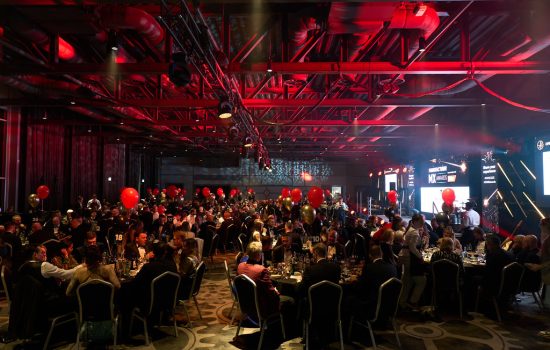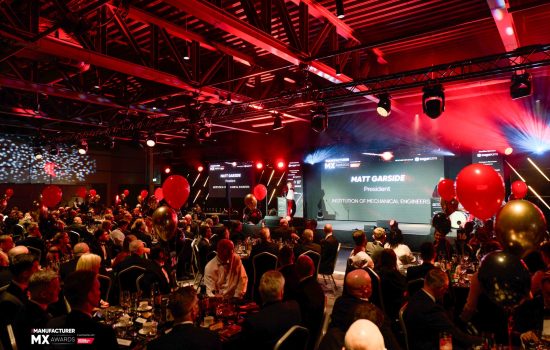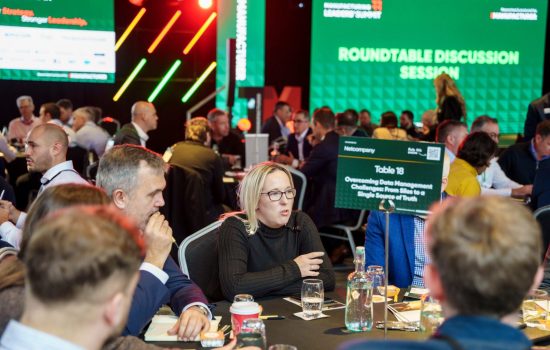
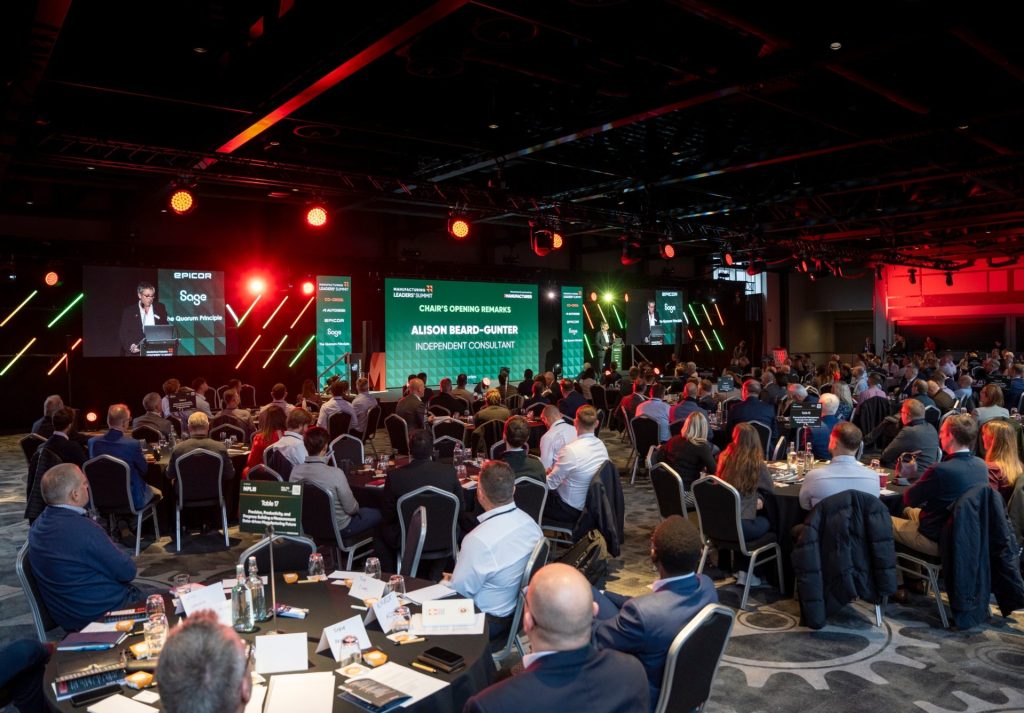
Now in its 17th year, Manufacturing Leaders’ Summit is the annual gathering of the industrial elite. Leaders, senior executives and decision-makers representing all industries across the manufacturing sector converge with thought leaders and industrial futurists for two days of knowledge-sharing, debate and discussion that shapes the industry for the coming 12 months.
The award-winning summit is a catalyst for transformation, covering the topics most pertinent to manufacturing leaders alongside economic and market factors, operational challenges and organisation challenges.
This year’s event focused on practical solutions and industry-leading insights featuring the highest calibre of speakers, case studies and interactive sessions with polls, networking opportunities and deeper dives into the technologies shaping the future of the sector.
Introducing the summit, Henry Anson, Director at The Manufacturer celebrated the resilience and importance of UK manufacturing. Acknowledging negative headlines about the economy, he noted that industry sentiment remains more optimistic on the ground.
Highlighting the UK’s 10% productivity gap with other G7 nations, Henry challenged manufacturers to take responsibility by focusing on innovation rather than blaming government or energy costs. He said: “It’s easy to blame government or energy prices, but responsibility lies with us to do something — and it has to be investment in new technology and new ideas.”
And event chair and independent manufacturing consultant, Alison Beard-Gunter drew on her 25 years in manufacturing and highlighted the sector’s power to turn ideas into reality. She urged attendees to help “forge manufacturing’s future” through technology, AI, sustainability and people-focused innovation. She also emphasised the importance of collaboration, noting that within the room were both challenges and solutions waiting to connect. Her mission for the summit: “Turn insights into intentions and actions that drive meaningful, human-centred progress in manufacturing.”
Here’s our key takeaways from day one’s keynote sessions and panel discussions.
Keynote – Shaping your future with data and AI
Asif Moghal, Director, D&M Market & Industry Development, Autodesk explored the evolving role of data and AI in transforming manufacturing. Reflecting on hundreds of conversations with design and manufacturing firms over the past year, he noted a striking shift in focus – from digital tools to the deeper questions of how to manage, connect and capitalise on data.
Despite data being called “the lifeblood of business,” Asif highlighted the fact that 80% of generated data is never used. And while most companies have policies on data quality and security, only 15% manage their data effectively enough to extract real value. Shockingly, nearly 70% still rely on Microsoft Excel for mission-critical tasks. With data volumes expected to triple – or even quintuple – by 2030, the challenge is growing fast.
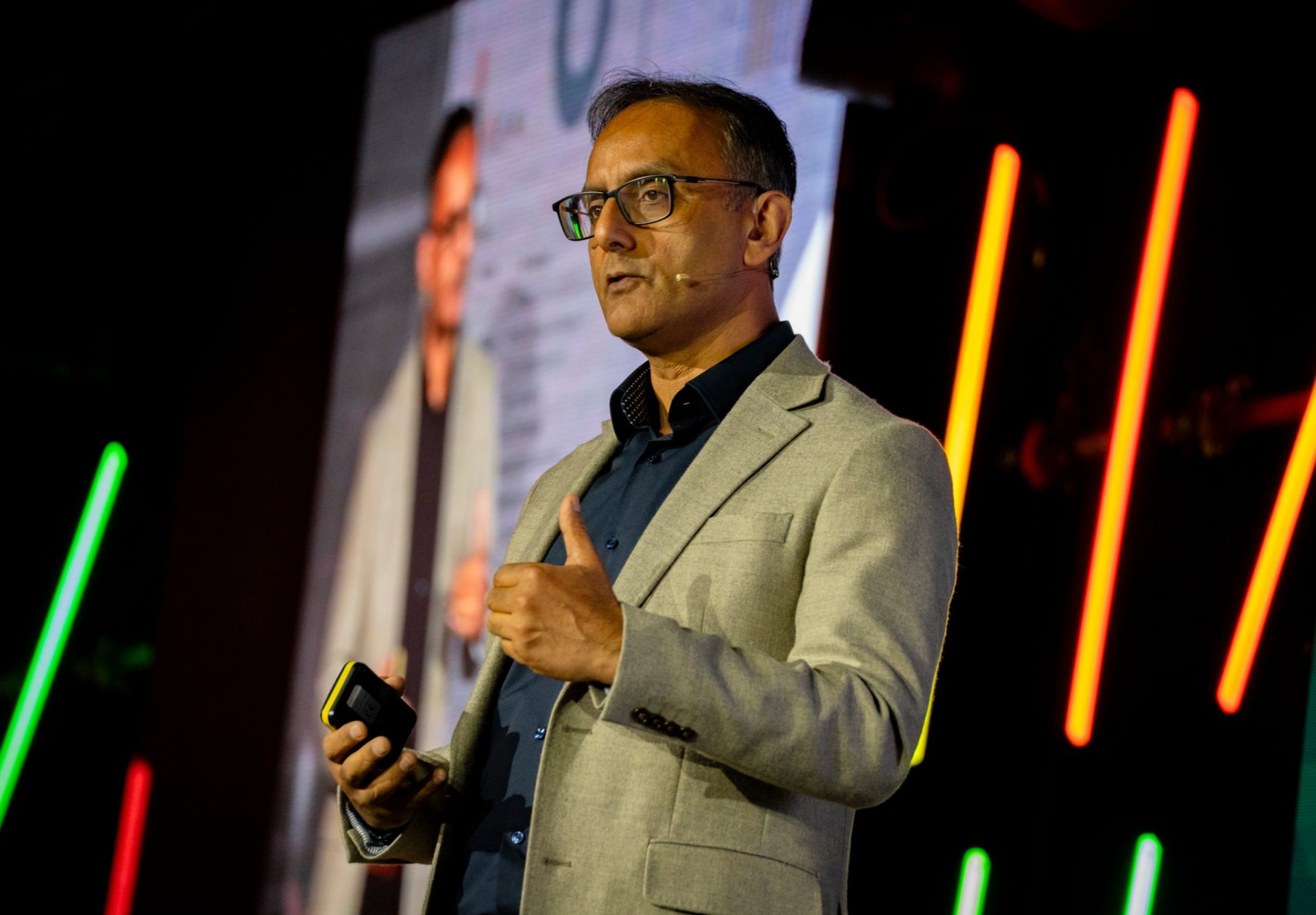
Asif outlined five key capabilities that distinguish successful manufacturers: connect, collaborate, automate, scale and innovate.
-
Connecting data across disparate systems enables insight and efficiency, as seen when one firm cited as an example cut engineering time from days to hours.
-
Collaboration breaks down silos, freeing innovation across teams.
-
Automation, far from replacing humans, removes low-value tasks—returning precious hours for creative work.
-
Scaling those gains across the organization turns small wins into transformational outcomes.
-
Finally, Innovation – supported by structured, connected data – allows companies to explore AI responsibly and effectively.
In summary, Asif urged leaders to see AI not as a distant, autonomous intelligence, but as a spectrum of automation that begins with simple task optimisation and matures toward system-wide learning. The message was clear: before chasing AI’s potential, organisations must first master their data.
By connecting, collaborating, automating, scaling and innovating, manufacturers can turn data from a dormant asset into a true digital superpower – fuelling productivity, creativity and growth for years to come.
Keynote – Sustainable manufacturing and the road to net zero: the Leonardo journey
Rob Armstrong, VP Manufacturing Engineering and Sarah Gobind-Cook, Sustainability Lead, Leonardo presented Leonardo’s comprehensive sustainability strategy — a core pillar of its transformation agenda.
The company’s Group Sustainability Plan is structured around four principles — People, Planet, Prosperity, and Governance — and eight focus clusters, including digitalisation, resource efficiency, circular economy and supply chain collaboration. In the UK, Leonardo targets net zero emissions (Scopes 1 and 2) by 2030 and across its full value chain by 2050.
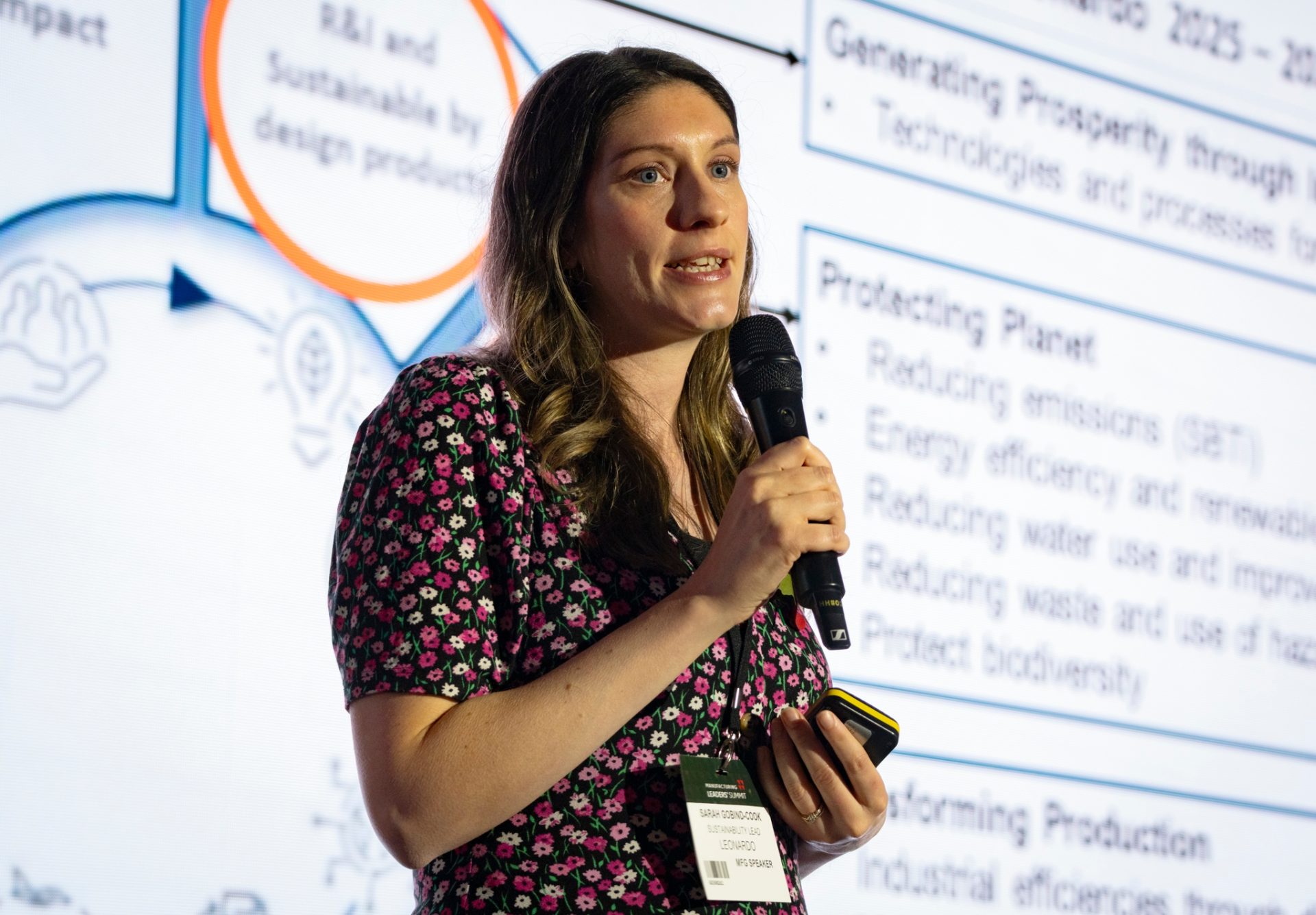
Sarah detailed Leonardo’s progress — a 74% reduction in direct emissions since 2018, mainly from switching to renewable energy. The next challenge, she said, lies in decarbonising complex legacy sites and tackling Scope 3 emissions across its vast supply chain. Collaboration is a key part of achieving this; and as such Leonardo partners with platforms like EcoVadis and JOSCAR Zero, and supports suppliers through training and ESG-focused procurement.
A major theme of the presentation was ‘Design for Sustainability’, which embeds environmental and ethical thinking into every stage of product development — from materials and manufacturing to use and end-of-life. Rob explained how Leonardo’s engineers use carbon footprint analysis, alternative materials research and lifecycle assessment to minimise impact while maintaining performance.
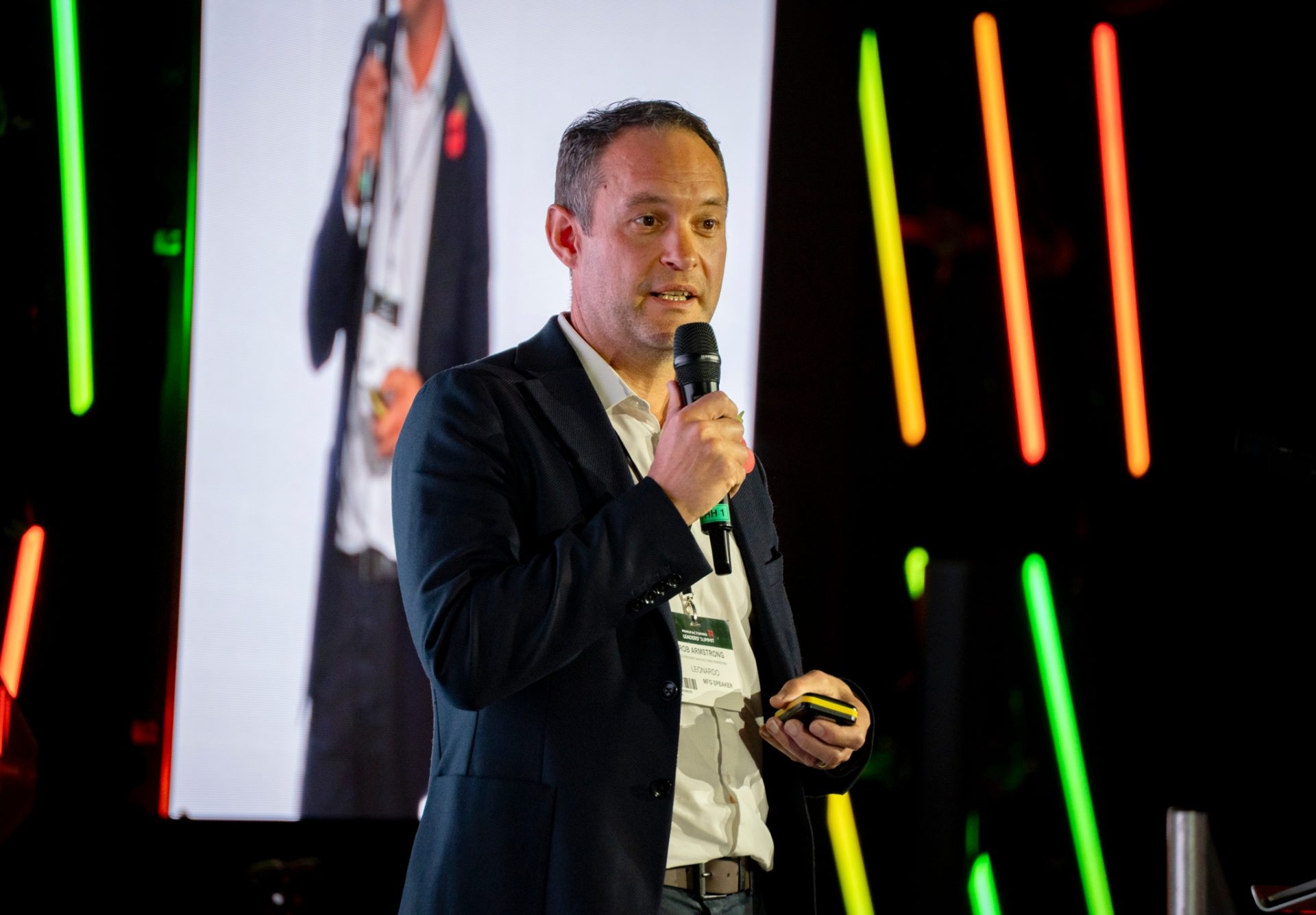
Digital transformation underpins this journey through the company’s Future Factory initiative, which integrates cloud-based data systems to connect design, production and sustainability insights.
Rob concluded with examples of circular innovation, such as recycling carbon fibre composites with Uplift 360 and developing additive friction stir deposition with the Advanced Manufacturing Research Centre. Together, these efforts show how Leonardo is fusing sustainability, data and engineering excellence to build a cleaner, more responsible aerospace future.
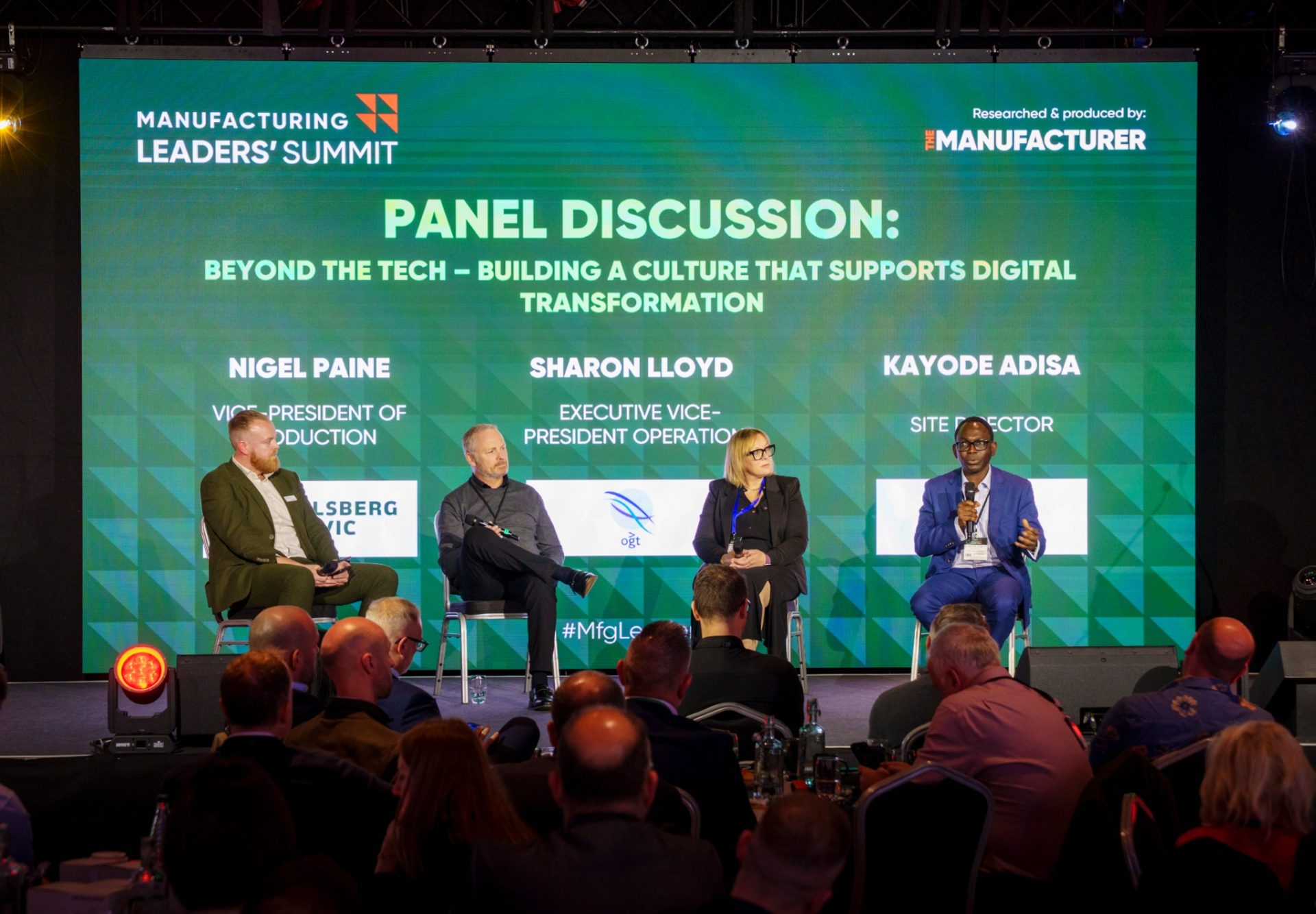
Panel discussion – Beyond the tech: building a culture that supports digital transformation
Nigel Paine, Vice President of Production, Carlsberg Britvic
Sharon Lloyd, Executive Vice President Operations, Oxford Gene Technology
Kayode Adisa, Site Director, Fine Line Bakeries
5 key takeaways from this panel
- Cultural barriers to change stem from fear and familiarity: Employees often resist transformation either because they fear they won’t be able to perform their jobs with new technology or because they are comfortable with existing routines. Successful change requires addressing these underlying anxieties and clearly communicating the ‘why’ behind the transformation.
- Leadership must connect strategy to everyday work: Senior leaders define the vision, but frontline workers know what makes their day-to-day jobs easier. Bridging top-down strategy with bottom-up implementation – through simple messaging and tangible benefits – drives adoption.
- Education, engagement and small wins accelerate adoption: Visualising benefits, using tools like QR codes for feedback, and showing incremental improvements help people embrace change. Leaders can coax early adopters and gradually bring resistors along.
- Successful transformation relies on the right team and skillsets: It’s critical to involve not just technology experts but also people who understand the business and workforce. Training operational staff in change management helps deploy new systems effectively and ensures that solutions meet real-world needs.
- Continuous improvement must be embedded in the culture: Transformation isn’t a one-off project. Organisations need a mindset of ongoing adaptation, learning from competitors, responding to regulatory changes and experimenting with digital tools. Cultivating a ‘practice the muscle’ approach ensures change becomes part of the organisation’s DNA.
Keynote – Obstacles, leadership and culture: lessons from a lean transformation
Ioana Hera, Head of Lean, Rolls-Royce explored the challenges and successes of implementing and sustaining a Lean transformation. While initiating Lean is relatively straightforward, Ioana stressed that the real difficulty lies in maintaining momentum and consistently engaging the team. The journey began by documenting the current landscape and co-creating a future-state map, coupled with hands-on Lean training to build understanding and enthusiasm. Despite initial excitement, sustaining change proved challenging due to operational pressures, staffing issues and cultural resistance.
A turning point came with the arrival a new plant manager eager to learn and experiment. He immersed himself in the processes, visited Toyota to see Lean principles in action, and adopted a mindset of incremental improvement – focusing on what could be influenced rather than what couldn’t. He encouraged his team to identify small efficiencies, emphasising that these actions were less about immediate gains and more about fostering a culture of continuous improvement.
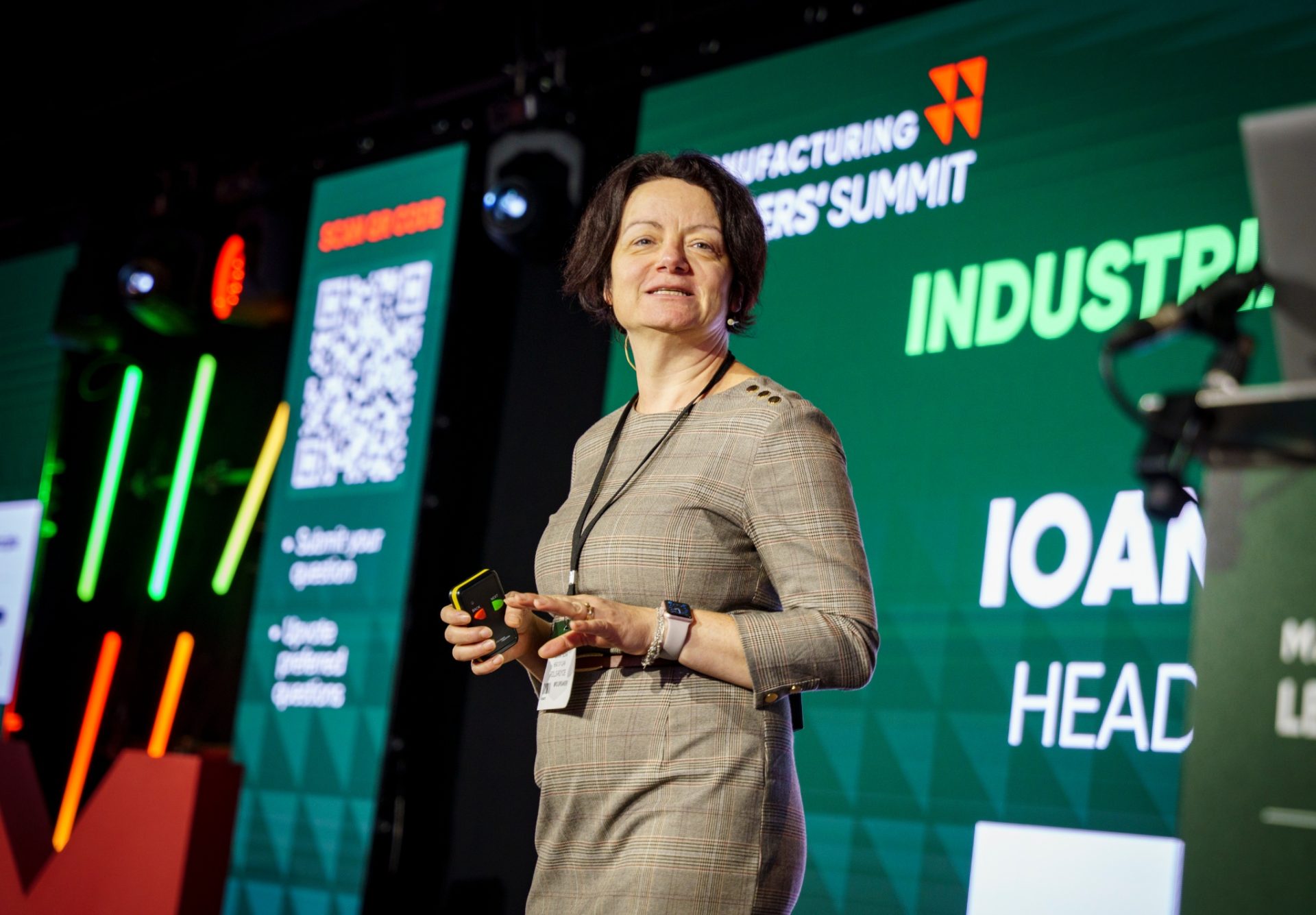
The strategy centred on leading by example, simplifying processes and empowering employees. By giving the team permission to solve problems themselves and actively participating in improvements, the company was able to demonstrate that Lean is everyone’s responsibility, not just management’s. Regular team briefings and visible leadership reinforced engagement and accountability, turning problems into opportunities for learning and growth.
The results underscored the importance of people engagement: when the team is motivated and involved, efficiencies, quality and overall performance improve. The key lessons highlighted were to benchmark best practices, clearly define a vision, focus on behaviours that inspire commitment and empower teams to drive their own improvements. Ultimately, the speech illustrated that Lean transformations succeed not just through process changes, but by cultivating a culture where everyone is actively engaged in continuous improvement.
Keynote – Future-ready manufacturing: a practical path to digital transformation
Andy Reid, Head of Product Marketing, ERP, Sage opened his talk by explaining that in business, taking the time to understand challenges and engage with others is essential for driving meaningful change.
He highlighted the UK manufacturing and distribution sector, sharing key statistics such as how the UK contributes approximately ten per cent of global GDP through manufacturing, yet labour shortages and a skills gap are significant obstacles. Despite low unemployment, the industry faces a projected shortfall of four million workers by 2030. Investment in digital technology remains limited, with the UK lagging in industrial robotics compared to other leading economies.
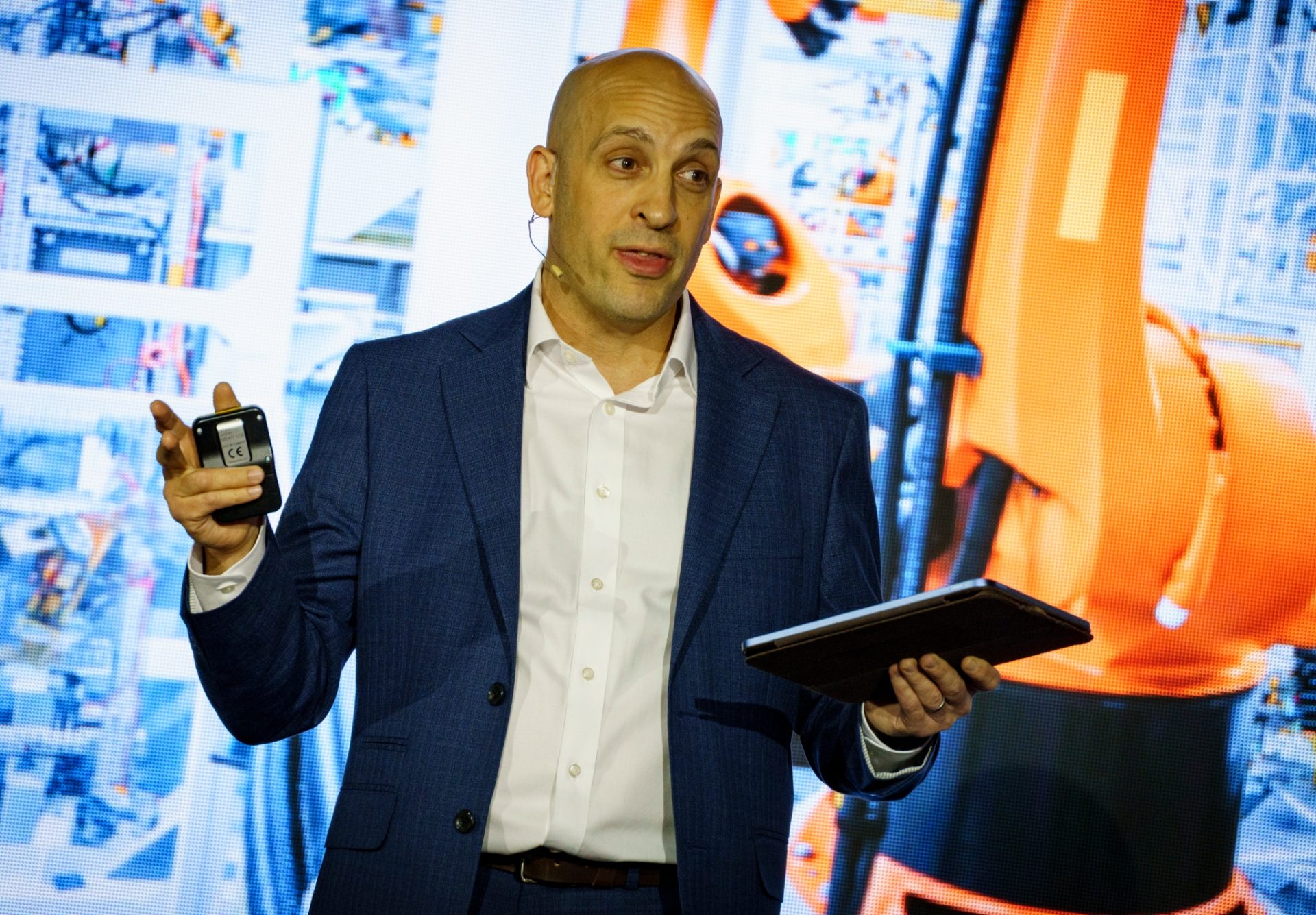
He emphasised the evolving role of finance leaders, who are increasingly involved in operations, workforce planning, risk management and innovation. While 94% of finance leaders believe they could do more to drive business growth, budget constraints and internal resistance often prevent them from implementing new processes. Reid stressed that engaging finance teams is critical for successful digital transformation.
He also highlighted the convergence of key technologies – cloud, AI, robotics, additive manufacturing and big data – that are enabling digitisation and smart factory operations. However, adoption is still limited: only ten per cent of UK manufacturers operate fully digital factories, and AI-powered finance tools are used by just six per cent. Andy urged companies to embrace digital solutions, ensure security and trust in AI tools and retain human leadership to guide their teams.
He concluded that while digitalisation can drive productivity, reduce defects and enhance decision-making, success depends on engaging people, upskilling teams and leveraging the right technology platforms. Finally, Andy encouraged attendees to explore available resources, ask for support and actively participate in shaping a more efficient, digitally empowered manufacturing sector.
For further information on Manufacturing Leaders’ Summit visit the event website.