


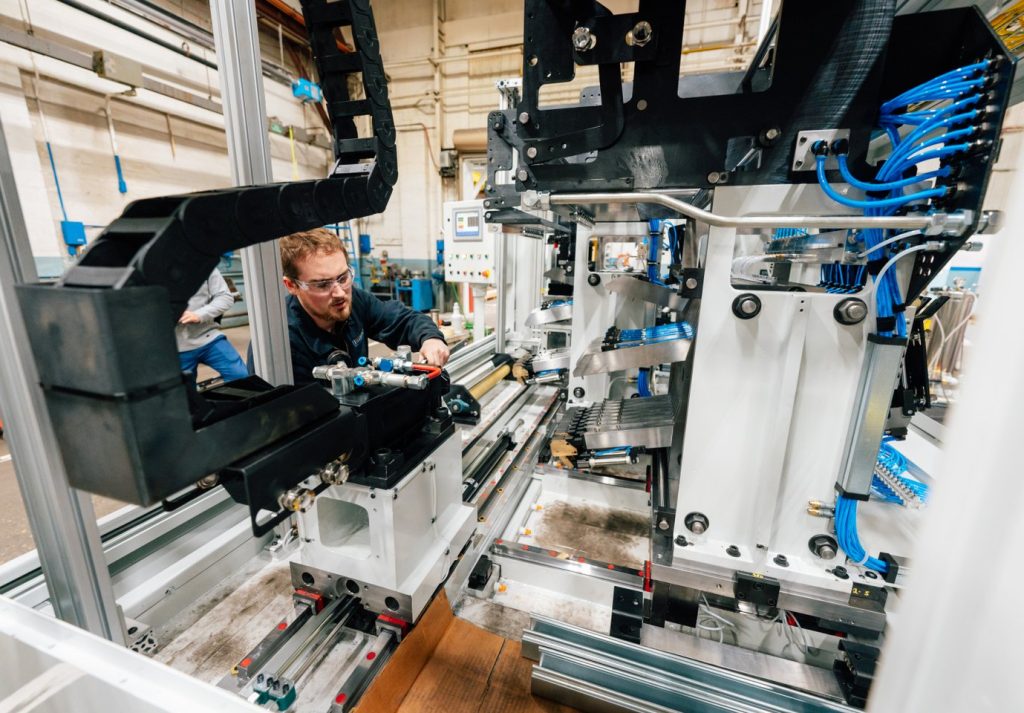
Detroit’s industrial story did not end when the factories began to close. Today, advanced manufacturing, robotics, electrification, AI and new investment are helping the Motor City write a new chapter which could prove as consequential as the age of mass production.
In the first two instalments of this series, we traced Detroit’s industrial journey: from a strategically located Great Lakes trading hub to the birthplace of modern manufacturing, and from the global capital of automotive production to a cautionary tale about what happens when industrial leaders struggle to adapt. But the story does not end with decline.
Detroit and the wider state of Michigan are now attempting something more ambitious than rebuilding the industrial base that once made the region famous. They are seeking to redefine what a manufacturing economy looks like in the 21st century, fusing Michigan’s deep expertise in engineering, production, tooling and supply chains with robotics, artificial intelligence, electrification and advanced mobility.
For Quentin Messer, Jr., CEO of the Michigan Economic Development Corporation (MEDC), the state’s lead organisation for business development and tourism, that shift is already under way.
“Detroit is known today as the epicentre of the renaissance of American manufacturing,” Messer said. “The next century of manufacturing innovation is emerging after the assembly line defined the 20th century.”
It is a bold claim for a city long portrayed as the archetypal victim of America’s industrial decline. Yet the signs that Detroit is moving beyond its Rust Belt identity are increasingly hard to dismiss. But the emerging model is not about recreating the factories of the past; it is about redeploying the capabilities that made Michigan an industrial powerhouse toward something considerably more diverse.
See what’s next for American manufacturing Join thousands of manufacturing leaders at Smart Manufacturing Week U.S. in Detroit, April 19–22, 2027, and discover the technologies, ideas and connections shaping the future of industry. Register your interest today ⬇️
A different kind of manufacturing hub
Detroit’s resurgence is not simply about reopening factories or courting another generation of large automotive plants. The region is instead building an interconnected network in which established manufacturers, technology firms, startups, research institutions and entrepreneurs operate alongside one another.
Messer cites the city’s growing entrepreneurship scene as evidence of the shift. Detroit has hosted the Reindustrialize Summit for a second consecutive year, while JPMorgan Chase’s Michigan Resiliency Summit has focused on strengthening US supply chains and rebuilding domestic capacity. CNBC named the city “The Next Silicon Valley” in 2023, a comparison that would have seemed inconceivable a generation ago.
What matters is the convergence of Detroit’s traditional industrial base with the tools of the digital economy. Michigan does not need to build a manufacturing culture from scratch: it already has generations of experience in engineering, production, tooling, logistics and supply chain management, backed by an extensive network of manufacturers and suppliers. The task now is applying that expertise to a new generation of industries.
“Michigan is a state of dreamers, makers, and doers,” Messer said, arguing that the state’s manufacturing and supply chain know-how, combined with its deep bench of experienced workers, is an asset other states, provinces and countries covet. And that may be Detroit’s greatest competitive advantage. It does not need to reinvent manufacturing; it needs to reinvent what it does with the manufacturing capabilities it already has.#

Quentin Messer, Jr., CEO of the Michigan Economic Development Corporation (MEDC).
From assembly lines to smart factories
The technologies driving that shift are familiar enough: robotics, automation, artificial intelligence, additive manufacturing and the merging of digital and physical production. What is changing is how deeply those tools are becoming embedded in the wider industrial base.
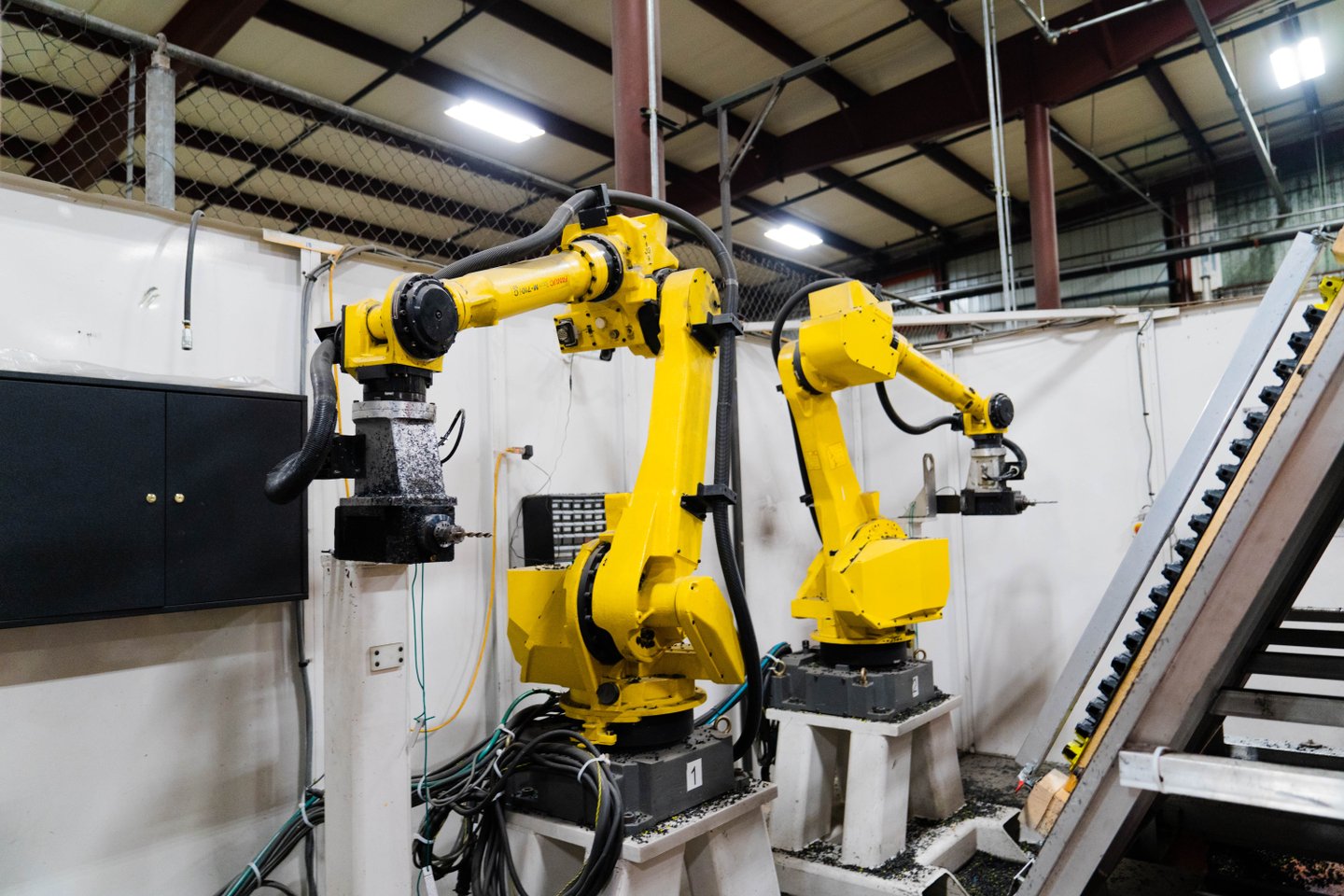
In southeastern Michigan, the neighbouring cities of Auburn Hills and Rochester Hills have earned the nickname “Robotics Hills,” reflecting the presence of globally recognised robotics firms including ABB and FANUC. Elsewhere in the region, Teradyne manufactures Universal Robots and collaborative robots, FANUC continues to expand its Michigan footprint, and Alquist 3D is developing robotic 3D concrete-printing technology.
Messer calls advanced manufacturing, robotics, AI and automation “the next iteration of our state’s innovative heritage,” arguing that they are “vitally important to the state’s economic and entrepreneurial futures.”
The distinction matters. Detroit is not discarding the industrial expertise it built up over the past century; it is extending it into an era in which software, data and automation sit alongside machinery, materials and human skill.
Michigan’s economic development strategy reflects that thinking. At its core are three pillars — People, Places and Projects — which Messer says must be pursued together. The state continues to back Automation Alley, Michigan’s largest technology business association, alongside Project DIAMOnD, which provides 3D-printing solutions for businesses, and the Centrepolis Accelerator, which supports small manufacturers and hardware entrepreneurs.
The focus on smaller manufacturers matters. Detroit’s historic industrial strength was built around enormous companies, but the modern manufacturing base depends on thousands of small and midsized businesses adopting new technology alongside their larger customers. Whether the gains of the next industrial shift spread across the wider supply chain, or stay concentrated among a handful of major corporations, may hinge on how well those smaller firms can digitise and automate.
For Messer, the state’s role is to create the conditions in which manufacturers can adapt, not simply to offer incentives for individual projects.
Building the workforce for the next industrial era
The workforce sits at the centre of that transition. Detroit’s original manufacturing model depended on huge numbers of workers performing specialised tasks; the factories of the future will need a different mix of skills. Engineers, robotics specialists, technicians and data specialists will all play a bigger role as manufacturing goes digital.
Michigan’s response includes an ambitious workforce target known as Sixty by 30. Under the initiative, the state wants 60% of Michiganders to hold either a two-year associate degree or a recognised industry credential in the skilled trades by 2030. The emphasis on trades is telling and highlights that the factory of the future will not simply need more software developers. It will still need machinists, electricians, maintenance specialists and robotics technicians who understand how physical production works. Detroit’s advantage may lie in combining its traditional manufacturing workforce with new digital skills, rather than treating the two as separate worlds.
Messer says Michigan’s transition has been built partly around “investing in people,” through programmes that help small and midsized manufacturers update their production processes. The MEDC also supports Industry 4.0 resources for smaller manufacturers and runs Small Business Support Hubs offering free mentoring and networking, while the MI Hub for Manufacturers helps businesses navigate economic, technological and global trade shifts.
Michigan has also worked to streamline permitting and other regulatory approvals, with the state’s commitment to operating at what Messer calls “the speed of business” replicated at the county and local level. The goal, in other words, is not just to land the next major factory. It is to make the existing manufacturing base more technologically capable, so smaller suppliers can take part in the transformation rather than being left behind by it.
Investment beyond the automotive industry
For decades, Detroit’s manufacturing fortunes were overwhelmingly tied to automobiles. While automotive and mobility remain important, investment is now expanding into batteries, advanced materials, aerospace, defence and other emerging technologies.
Messer highlights Ford’s BlueOval Battery Park in Marshall, which is ramping up hiring and production of LFP batteries and battery storage. LG Energy Solution has taken over a former General Motors facility in Lansing, where it will produce batteries for Tesla, and has separately secured a supply contract with DTE Energy, one of Michigan’s largest utilities. Further north, Hemlock Semiconductor continues to invest in its Michigan operations, while Corning has announced a major capital investment expected to create more than 1,000 advanced manufacturing jobs.
The west side of the state has drawn its own share of investment, including from Howmet and GE Aerospace, which has committed $60m to expand its Michigan facilities. Together, these investments mark a shift in Michigan’s industrial proposition. The state is no longer simply competing for the next generation of automotive assembly plants; it is trying to capture more of the technologies and supply chains surrounding the industries of the future.
Advanced energy is a key part of that strategy. A study cited by Messer from the Upjohn Institute found that the projected benefits from Michigan’s major battery projects exceed state-provided financial incentive costs by about 55%, creating an estimated $880m in benefits for Michigan residents, mostly through higher wages.
The value extends beyond any single battery plant. By drawing investment into batteries, energy technology and advanced materials, Michigan is building capabilities that can support multiple industries rather than depending on one dominant sector.
The defence and aerospace opportunity
Defence and aerospace form another strand of that diversification. Michigan has been building up defence-related manufacturing and supply chains as the US works to strengthen domestic production and national security, and the state has drawn national attention for drone development and deployment. The Pentagon has designated Camp Grayling and the Alpena Combat Readiness Training Center a National All-Domain Warfighting Center, opening up 17,000 square miles of restricted military airspace for advanced commercial and military testing.
Messer points to potential applications across healthcare, automotive and mobility, maritime and defence. Michigan’s Advanced Aerial Mobility Initiative brings together the state’s Office of Defense and Aerospace Innovation, the Michigan National Guard, the Michigan Department of Transportation and the Office of Future Mobility and Electrification to support drone testing and deployment.
The aerospace story goes further still. Michigan-based companies contributed to NASA’s Artemis II mission, with Moeller Aerospace supplying blades and nozzles for the rocket’s four engines and the University of Michigan providing solar radiation forecasts used to plan the flight. According to Messer, at least 78 Michigan-based entities contributed to the mission.
Michigan is, in effect, applying its industrial DNA to markets that barely existed during Detroit’s manufacturing heyday. The same capabilities that once produced automobiles at unprecedented scale can now serve autonomous systems, drones, aerospace components, defence equipment and batteries — a manufacturing base that is more varied, and potentially more durable, than the one that defined the Motor City’s peak.
From Motor City to innovation hub
Perhaps the most striking part of Detroit’s transformation is that some of its most interesting developments are happening outside traditional factory walls. Michigan Central is a powerful example.
The former train station sat vacant for decades before being redeveloped into a mobility and innovation hub. Alongside Newlab and other initiatives, it represents a different model of industrial development, built on collaboration between technology companies, entrepreneurs, researchers and established businesses.
Messer points to Michigan Central as one of the projects demonstrating Detroit’s new identity, alongside a run of MEDC-backed investments that would have seemed unlikely a decade ago: Henry Ford Health is building a major new campus in the city, while Eccalon, a defense contractor, is establishing its headquarters there. And this is all on top of the robotics and 3D-printing work already under way at Teradyne and Alquist 3D.
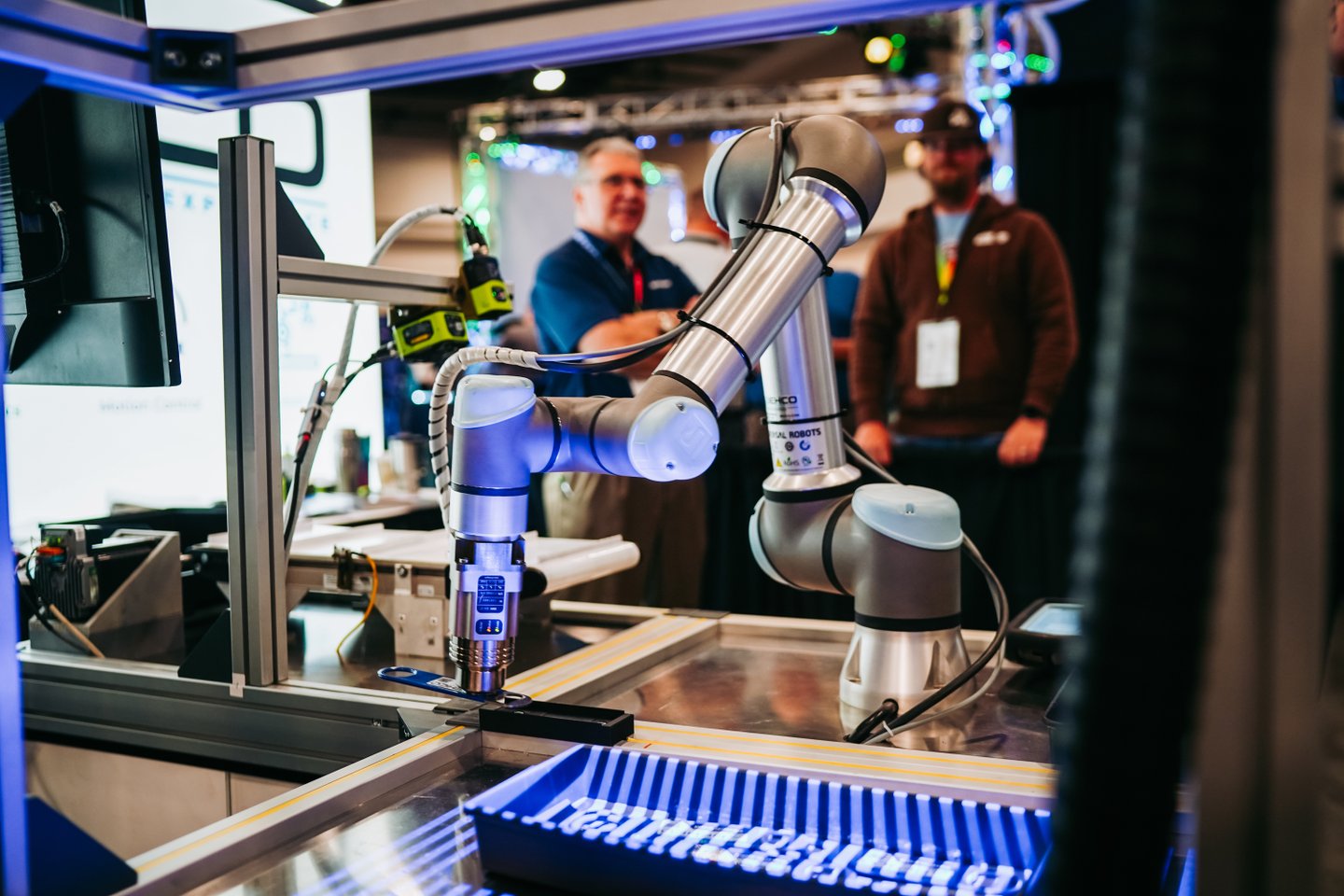
Smart manufacturing does not exist in isolation. The factory of the future depends on connections between manufacturers, technology companies, universities, suppliers and research institutions, with innovation increasingly happening at the boundaries between sectors rather than inside a single organisation. Detroit’s challenge (and its opportunity) is turning its existing industrial base into a platform for that kind of collaboration.
Its universities are central to that equation. Wayne State University — a Carnegie R1 institution and one of the most demographically diverse urban research universities in the country — anchors Michigan’s statewide Research Universities for Michigan consortium, alongside the University of Michigan and Michigan State University, both of which also have a physical presence in Detroit. The MEDC says state investment supporting technology transfer from universities to startups has leveraged about $85 for every $1 of state support over the past five years, catalysing more than 15,000 jobs.
The model, then, is not just about attracting companies from elsewhere. It is about creating conditions for new companies to emerge locally and linking university research to commercial opportunity — much as Detroit’s original industrial revolution was driven by entrepreneurs willing to experiment with new technologies and production systems.
A city built for global trade
Detroit’s location is another of its advantages, one that helped establish its industrial importance more than a century ago.
The city sits directly on the Detroit River opposite Windsor, Ontario, making it the largest US city bordering Canada. The region hosts what Messer describes as the most active trade corridor in North America, with consulates representing countries from around the world reinforcing its international character.
That geography carries fresh weight in an era of reshoring and supply chain resilience. As Part 1 of this series noted, Detroit’s position on the Great Lakes once helped manufacturers bring in iron ore, coal and timber while distributing finished products across an expanding industrial economy. Today, that same proximity matters again as manufacturers reconsider global supply chains and look for regional production and closer relationships between suppliers and customers.
Messer names Michigan’s international connectivity as one of four reasons the world should pay attention to the region, alongside its manufacturing heritage, the pace of innovation across Detroit and Michigan, and the influence of Michigan businesses on US economic policy. Few emerging manufacturing hubs could easily replicate that combination of industrial expertise, cross-border trade infrastructure and an established global network.
Detroit’s next industrial revolution
There is a certain symmetry to Detroit’s story. More than a century ago, the city became the centre of one of the world’s first great experiments in scalable mass production, proving that manufacturing could be transformed from a craft-based process into a highly organised system capable of producing complex products for millions of consumers.
That model became so successful it grew difficult to change. Now Detroit has a chance to demonstrate a different kind of industrial leadership — not by perfecting a single production model, but by continually adapting to whatever comes next.
The technologies are new, but the underlying challenge is familiar. Artificial intelligence, robotics, automation, electrification, additive manufacturing and spatial intelligence are changing how products are designed, made and moved, forcing manufacturers to rethink the relationship between people, machines, data and production.
Detroit knows what industrial transformation feels like. It has lived the exhilaration of becoming a manufacturing powerhouse, the pain of losing its competitive edge, and the slow work of rebuilding. The lesson from its history is not that manufacturing leadership inevitably fades, but that it must keep evolving. That is why the city’s current resurgence matters. Messer points to Detroit’s “grit, ingenuity, and relentless optimism” as forces already reshaping its future, citing the launch of Michigan Central and Newlab, the state’s Office of Future Mobility and Electrification, and partnerships focused on transforming how data, people and products move.
The ambition is deliberate, and Messer reaches for a racing metaphor to make the point. With Cadillac and Ford both fielding cars on the Formula One grid this season, he believes Detroit and Michigan are positioned to “assume the pole position” in what he calls an “AI-enabled, spatial intelligence driven era of industrial production” — a very different proposition from the Detroit of the 1980s. The city is no longer trying to recreate the past. It is building on it.
Detroit’s first industrial revolution made it synonymous with the assembly line. Its next may be defined by how well it combines that century of manufacturing expertise with the technologies of the digital age. If it succeeds, the Motor City could once again become a proving ground for the future of manufacturing; not by returning to what it was, but by showing what an industrial city can become.
Never miss a North American manufacturing story
Sign up for our free weekly North American Manufacturing Digital Briefing to receive the latest industry news, insights and analysis direct to your inbox every Monday.